 thefranchisefacts.com
7 Best AI Radiology Software Platforms in 2026
Your radiology team is drowning in scans and DICOM files. Many platforms promise AI triage, but few connect cleanly to your PACS, and some still lack clearance for the findings you need flagged. That gap is usually what pushes imaging leaders to start comparing vendors.
This guide breaks down what to check first: clinical validation, regulatory clearance, and real workflow fit. Then it ranks the 7 best AI radiology software platforms for 2026, explains where Medicai fits as an imaging infrastructure layer, and gives you concrete criteria for matching capabilities to your scan volume and budget.
What to Look For in AI Radiology Software
Selecting AI radiology software requires evaluating clinical evidence, regulatory status, and real-world workflow fit, not just algorithm accuracy. A model can post impressive numbers in a lab and still underperform on your patient mix or sit unused because it disrupts the reading workflow.
These three pillars carry equal weight. Clinical validation tells you whether the AI was tested on patients like yours. Regulatory clearance confirms that a reviewer examined the intended use and performance data. Workflow integration decides whether radiologists actually adopt the tool day to day.
It helps to think of each pillar as a filter rather than a score. A platform that clears all three deserves a closer look, while one that stumbles on any of them carries risk, whether that risk is diagnostic, legal, or financial.
Many buyers focus on the headline algorithm and overlook the surrounding checks. That is a common mistake, because deep learning algorithms are only one part of a dependable deployment. The sections below explain what to verify for each pillar, with questions you can put directly to radiology AI vendors during an evaluation.
Clinical Validation, Regulatory Clearance, and Workflow Integration
Clinical validation should include peer-reviewed studies with sensitivity and specificity metrics on a dataset representative of your patient mix. Vendor marketing pages rarely tell the whole story, so look for the underlying publications and read how the study was designed.
Use this checklist when reviewing any platform:
- Clinical validation: Check for peer-reviewed publications, multicenter trials, and performance metrics such as AUC, sensitivity, and specificity. Confirm the study population resembles your own in age, scanner type, and disease prevalence.
- Regulatory clearance: Verify FDA 510(k) clearance or CE marking, then read the intended use statement. A clearance covers a defined population and clinical scenario, so make sure it matches how you plan to use the tool.
- Workflow integration: Confirm support for DICOM, HL7, and EHR interoperability. Ask whether the AI runs natively inside your PACS or requires a separate viewer, and whether results return to your reporting environment automatically.
Specific questions surface more than general ones. For a CT pulmonary embolism tool, ask: "What is the AUC for your PE algorithm in patients with renal impairment?" For mammography AI, ask how performance held up across different scanner manufacturers. For stroke detection or intracranial hemorrhage triage, ask about time-to-notification in a live setting.
Integration depth affects both adoption and ROI. A tool that opens in a separate viewer adds clicks to every case, and busy readers may simply stop using it. PACS integration that surfaces findings inside the existing workflow, and structured reports that flow into radiology reporting systems, tend to earn sustained use. The same logic applies to cloud-based radiology and on-premise deployment alike: fit matters more than the delivery model. With these criteria in hand, the platform comparisons that follow become far easier to judge.
1. Medicai - Best Overall
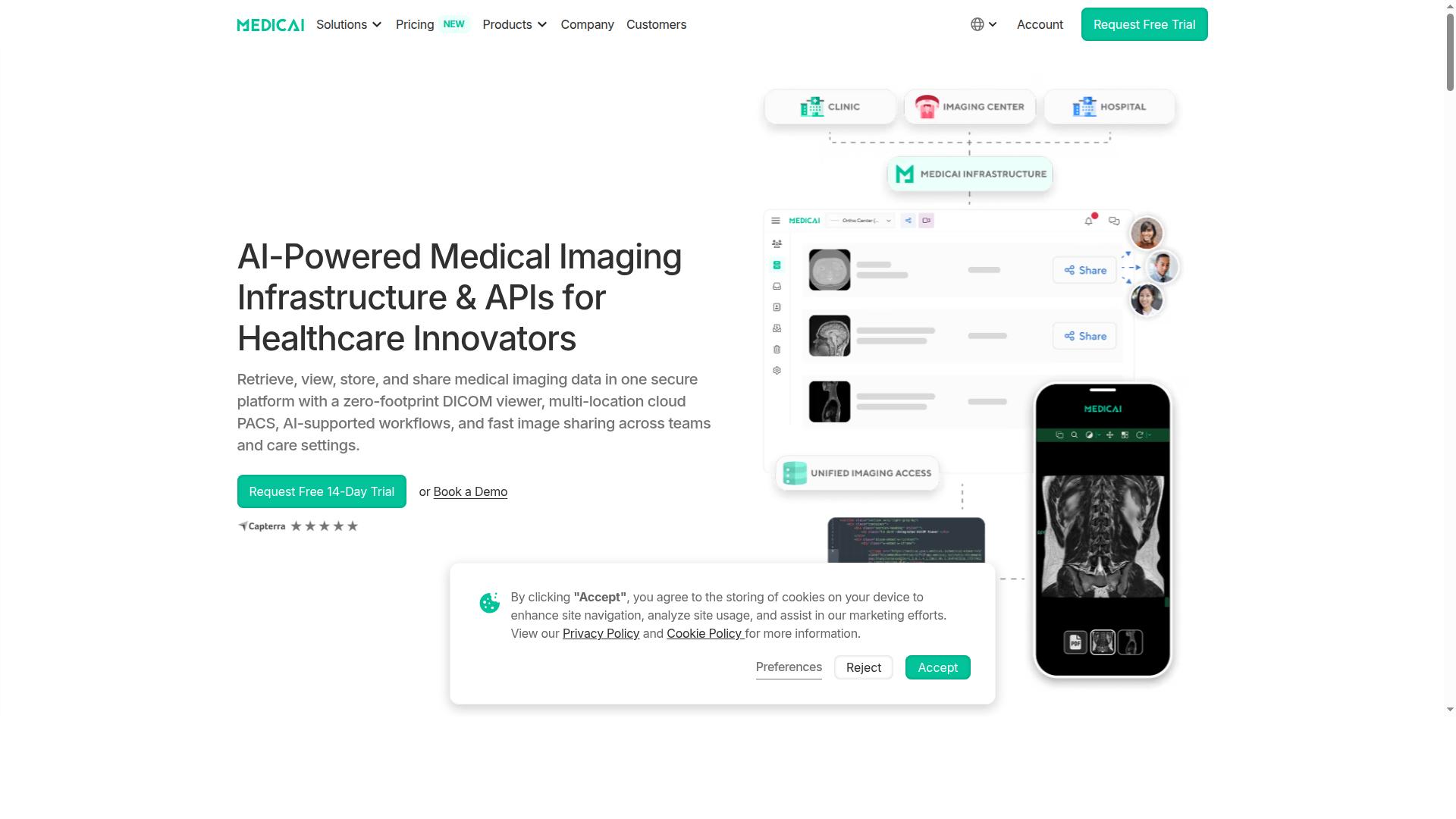
Medicai stands out as the best overall AI radiology software for 2026 because it combines a zero-footprint DICOM viewer with cloud-native infrastructure and AI-ready workflows. It is a cloud-based medical imaging platform that lets healthcare providers retrieve, view, store, and share imaging data securely.
The viewer is FDA/CEE cleared, and the platform is HIPAA and GDPR compliant. That mix of clinical-grade viewing and modern security makes it a strong fit for organizations that want an all-in-one platform supporting AI integration without heavy IT overhead.
Seventy clinics and hospitals already run on the platform, alongside more than 10,000 active doctors. The details below show how the infrastructure and pricing are structured.
AI-Powered Imaging Infrastructure and Pricing
Medicai's infrastructure includes a DICOM Gateway, Cloud PACS, and Vendor Neutral Archive, with transparent monthly pricing starting at $249. The product set is organized into three functional groups, which makes it easier to map against an existing imaging stack.
- CONNECT & RETRIEVE: Medical Imaging Uploader and DICOM Gateway
- STORE & MANAGE: Cloud PACS, Medical Image Exchange, Patient Case Management, Vendor Neutral Archive, Backup and Disaster Recovery
- ACCESS, VISUALIZE, COLLABORATE: Structured Reporting for Radiology, Doctor and Patient Imaging Portals, DICOM Viewer, Medicai Imaging API, and Mobile Imaging App
Scale is handled at the platform level rather than per customer. Medicai reports 1M+ studies processed per year, 1.7M+ studies in storage, and 50M+ yearly API transactions. For diagnostic imaging teams, that volume signals a system built for sustained clinical use.
Pricing is monthly with no per-user fees, which matters for departments where radiologist and referrer counts grow over time.
| Plan | Monthly Price | Storage | Connected Locations |
|---|---|---|---|
| Starter | $249/month | 500 GB | None |
| Standard | $749/month | 2 TB | One |
| Enterprise | Custom | Custom | Multiple |
Yearly billing saves 15%, bringing Starter to $209/month and Standard to $639/month. A DICOM Gateway setup runs $1,000 one-time per location, and a free 14-day trial of Starter features is available without a credit card.
AI-powered workflows come through partnerships with radiology AI vendors including MD.ai, Rayscape.ai, and MedDream, supported by a Microsoft Azure partnership. The platform also offers a Radiology AI Co-Pilot and AI-Powered Diagnostics. For teams weighing cloud-based radiology against on-premise deployment, this model keeps AI integration out of local hardware planning.
2. Aidoc
Aidoc is known for its AI triage and notification platform that prioritizes critical findings like intracranial hemorrhage and pulmonary embolism. The company built its reputation on helping care teams spot urgent cases sooner, so radiologists can review the most time-sensitive scans first.
Its core offering centers on FDA-cleared triage algorithms that flag suspected abnormalities and push alerts to the right clinician. Rather than replacing the radiologist, the software acts as a prioritization layer that sits alongside the existing reading workflow.
For hospitals weighing AI radiology software in 2026, Aidoc is a name that comes up often in emergency and acute care settings. This overview covers where it fits best and what to keep in mind before requesting a quote.
Aidoc's triage portfolio spans several high-acuity conditions commonly seen in busy emergency departments. Publicly described use cases include intracranial hemorrhage, pulmonary embolism, and cervical spine fractures, among other critical findings. Each algorithm is designed to detect a suspected abnormality and route a notification to the appropriate team.
The emphasis is on speed of escalation. When a scan suggests a time-sensitive condition, the platform surfaces that case ahead of routine reads, which can help reduce turnaround time for critical results. This matters most in settings where delays carry real clinical consequences.
The platform is generally described as integrating with PACS and EHR systems, allowing alerts to flow into the tools clinicians already use. As with any radiology AI vendor, buyers should confirm which interfaces, such as DICOM and HL7 connections, are supported for their specific infrastructure.
Aidoc tends to be a strong fit for hospitals with high-acuity emergency departments and heavy CT volumes. Facilities that handle a steady stream of stroke, trauma, and chest pain cases are the natural audience for triage-focused software. In these environments, faster flagging of critical findings can support earlier clinical decisions.
It is a less obvious priority for outpatient imaging centers with mostly routine studies, where triage urgency is lower. Organizations should also weigh how well the algorithms match their case mix before committing.
- Confirm which FDA-cleared algorithms cover your most frequent urgent findings.
- Verify PACS integration and how alerts reach referring physicians.
- Check EHR interoperability and notification routing options.
- Ask how the vendor measures turnaround time for critical results.
One practical caveat is pricing. Aidoc is generally offered through custom quotes rather than published list prices, so costs depend on scope and deployment size. Enterprise rollouts across multiple sites or modalities may carry higher pricing than a single-department deployment.
Buyers should ask for a clear breakdown of what the quote includes, such as the number of algorithms, integration work, and support terms. It also helps to compare total cost against the workflow gains you expect, rather than license fees alone.
Overall, Aidoc remains a credible option among radiology AI vendors focused on triage and critical result communication. Its strength lies in emergency-driven workflows, while its custom pricing means budget conversations should start early in any evaluation.
3. Annalise.ai
Annalise.ai offers comprehensive AI detection across chest X-rays and head CTs, with a focus on high-sensitivity lesion detection. The platform is built for radiology teams that want broad finding coverage from a single vendor rather than a narrow, single-indication tool.
Its two flagship solutions target the exams most often read under time pressure: chest X-ray analysis and head CT triage. Both are designed to surface a wide range of abnormalities and support the reader rather than replace the reading.
The chest X-ray product is positioned around detecting many findings at once. Publicly described capabilities include support for identifying lung nodules, pneumothorax, and fractures, along with other common thoracic abnormalities.
This multi-finding approach matters in emergency and inpatient settings, where a single image can contain more than one actionable problem. A tool that flags several categories helps reduce the chance that a secondary finding goes unnoticed.
The head CT solution follows a similar philosophy for neurological imaging. It is aimed at helping clinicians spot and prioritize critical findings quickly, which is valuable when intracranial hemorrhage or other urgent conditions are on the differential.
Annalise.ai has pursued formal regulatory pathways for its products, including CE marking in relevant markets and FDA clearance for some of its offerings. Clearance status can vary by product and indication, so buyers should confirm the specific clearance for each module they plan to use.
Regulatory status is a practical screening criterion for any FDA-cleared AI or CE-marked software under consideration. It signals that a vendor has submitted evidence for review, though it does not by itself guarantee performance in a given clinical environment.
Organizations should verify current clearances directly with the vendor and match them to their own jurisdiction and intended use case before procurement.
The platform is designed to fit into existing imaging workflows through PACS integration, so results can appear alongside the images radiologists already review. This reduces the need for separate viewers or manual handoffs.
Deployment typically involves connecting to modality and archive systems using standards such as DICOM, with HL7 and EHR interoperability relevant where results need to reach broader clinical systems. Exact integration options should be confirmed during a technical evaluation.
Because the tools are aimed at emergency and inpatient use, tight turnaround and reliable routing matter as much as detection breadth. Teams should test how quickly results surface in their own PACS before committing.
Annalise.ai is a reasonable fit for organizations that prioritize broad detection coverage over depth in a single subspecialty. Teams reading high volumes of chest X-rays and head CTs, especially in acute care, are the clearest match.
Buyers weighing radiology AI vendors in 2026 should compare the number of supported findings, clearance scope, and integration effort side by side. A platform with wide coverage can reduce vendor sprawl, but only if its findings align with local case mix.
Specific performance metrics are best requested directly from the vendor and validated against local data, since published figures may not reflect a given site's patient population or equipment.
4. Lunit
Lunit specializes in AI for mammography and chest X-ray interpretation, with FDA-cleared and CE-marked products. The company focuses its research on cancer screening and diagnosis, aiming to help clinicians catch disease earlier and support treatment decisions.
For radiology teams evaluating AI radiology software in 2026, Lunit is a strong example of a vendor built around a narrow set of high-impact clinical use cases rather than a sprawling product catalog. That focus shapes both its strengths and the way it fits into a medical imaging platform stack.
Lunit's portfolio centers on two flagship products that address very common imaging exams:
- Lunit INSIGHT CXR analyzes chest X-rays and is designed to flag multiple findings, including lung nodules, fibrosis, and calcification.
- Lunit INSIGHT CXR Triage classifies normal versus abnormal findings in emergency settings, covering conditions such as pneumothorax and pleural fluid. It received FDA clearance in November 2021.
- Lunit INSIGHT MMG supports mammography interpretation, the company's core breast imaging product.
Beyond screening, Lunit also develops tools that predict patient response to immunotherapy, an area that sits closer to oncology decision support than routine diagnostic imaging.
Lunit's products carry CE marking in Europe and FDA clearance in the US, which matters for radiology AI vendors serving multi-country health systems. These clearances signal that the algorithms have passed regulatory review for their stated clinical uses.
Published studies on mammography and chest X-ray AI generally suggest that deep learning algorithms can improve cancer detection rates when used as a second reader or concurrent aid. Lunit's own research has contributed to this body of evidence, though results vary by population, equipment, and reading workflow. Buyers should treat vendor claims as a starting point and review peer-reviewed validation on their own patient mix.
Lunit's tools are built to slot into existing imaging workflows through PACS integration and standard formats such as DICOM. That means results can surface inside the reading environment rather than in a separate application, which matters for workflow automation and turnaround time.
The company works with hospitals, clinics, and laboratories worldwide, and its products are used in screening programs where high volumes make consistent AI triage valuable. For population screening, the appeal is straightforward: deep learning algorithms can help prioritize abnormal cases and reduce the burden on overstretched reading teams.
Lunit is particularly relevant for breast imaging centers and population screening programs, where mammography AI and chest X-ray analysis are daily priorities. Teams running high-volume screening will find its focused product line easier to evaluate than a broad, general-purpose platform.
Organizations that need wider coverage, such as stroke detection, CT pulmonary embolism triage, prostate MRI, or bone age assessment, may need to pair Lunit with additional radiology AI vendors. As with any FDA-cleared AI or CE-marked software, the practical questions are integration depth, EHR interoperability through HL7, and how well the output fits existing structured reports.
5. Qure.ai
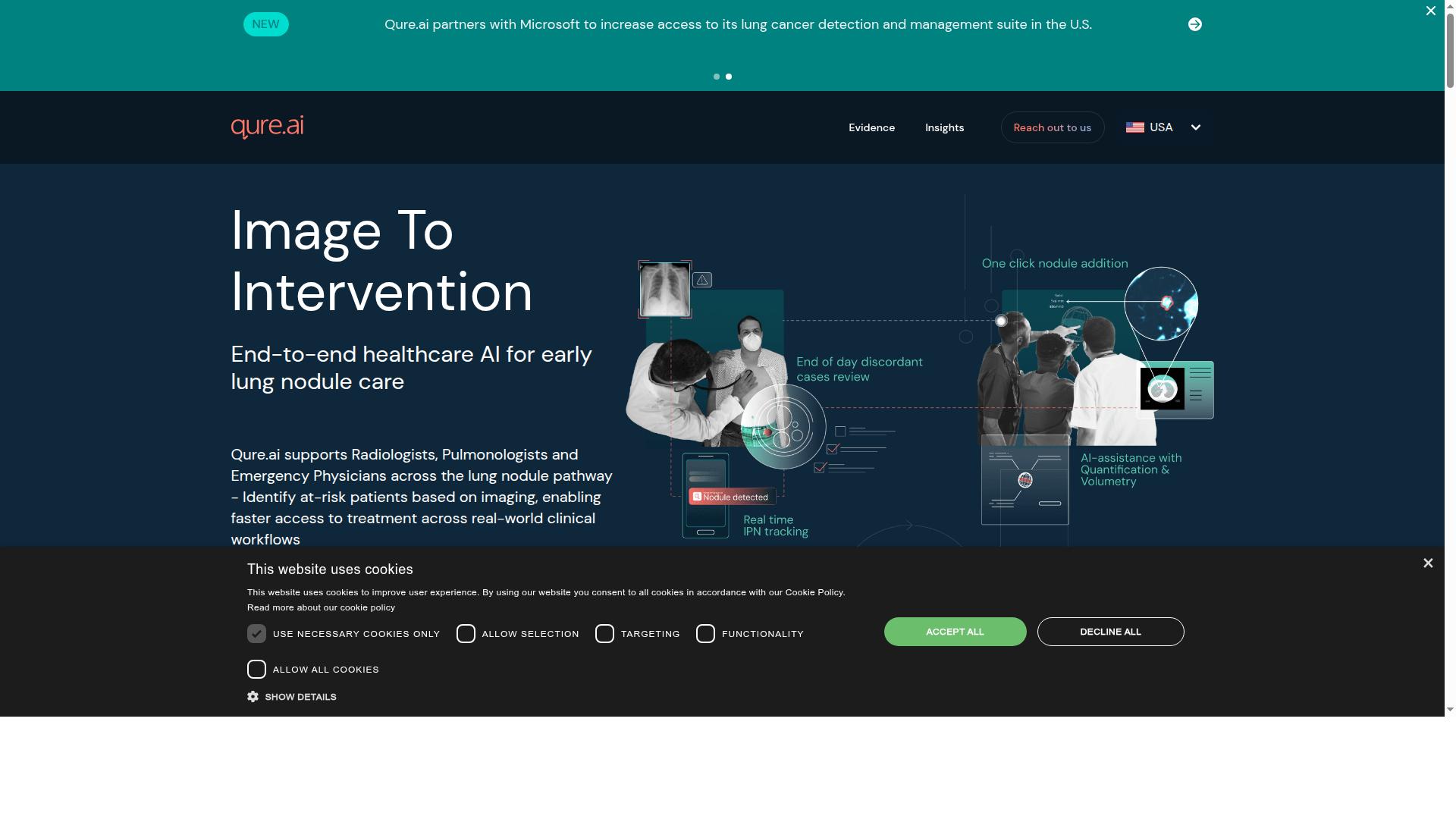
Qure.ai provides AI solutions for chest X-rays, musculoskeletal imaging, and lung nodule screening, with a strong presence in global health and teleradiology. The company uses deep learning algorithms to read and interpret medical images, and its tools are designed to flag critical findings quickly so care teams can act sooner.
Its portfolio has been evaluated by the World Health Organization, and the software carries FDA approval and CE certification. That combination of regulatory clearances makes it one of the more widely recognized radiology AI vendors in the 2026 landscape, particularly for organizations that need proven, deployable tools rather than experimental pilots.
The platform is built around a focused set of clinical applications, each aimed at a specific imaging task:
- qXR for chest X-ray analysis, supporting triage and screening of common and critical findings
- qMSK for musculoskeletal imaging, including fracture detection
- qLung for lung nodule screening and follow-up
This narrower scope can be an advantage. Teams that mainly handle chest X-rays and musculoskeletal exams get tools tuned to those workflows, rather than a broad platform with uneven depth across modalities. Buyers comparing diagnostic imaging platforms should weigh this focus against broader suites that cover mammography AI, prostate MRI, or stroke detection.
Qure.ai's strongest differentiator is its reach in low-resource and high-volume settings. The tools serve as a first level of screening in underserved areas, where specialist radiologists may be scarce. For teleradiology workflows, that means images can be pre-read and prioritized before they reach a remote reader, which supports faster turnaround on urgent cases.
The company collaborates with health ministries, the NHS, AstraZeneca, and StopTB, and its solutions are used across 50 countries. These partnerships matter for buyers assessing long-term viability: deployments at national health system scale suggest the software can handle varied imaging equipment, protocols, and reporting standards. Specific accuracy figures should still be validated against your own patient population and equipment.
Deployment flexibility is another practical consideration. Qure.ai offers both cloud-based radiology and on-premise deployment options, which helps organizations with strict data residency rules or limited connectivity. On-premise installs can keep patient data inside the hospital network, while cloud setups reduce local infrastructure demands.
Integration with existing systems is where most radiology AI projects succeed or stall. Buyers should confirm how any platform handles DICOM image ingestion, HL7 messaging, and EHR interoperability before committing. Qure.ai's global footprint suggests experience with heterogeneous IT environments, but each site should still run its own integration checks. The company secured $40 million in funding led by Novo Holdings and HealthQuad, with MassMutual Ventures participating, to expand in the US and Europe, which points to continued product investment.
Qure.ai fits best with organizations that prioritize chest X-ray analysis, fracture detection, and lung nodule screening, especially where teleradiology or population screening is central. It is a versatile, globally accessible option with credible regulatory standing and real-world deployments at scale.
As with any vendor, performance claims should be treated with appropriate caution and verified through local validation. No public pricing is available, so budget discussions require a direct quote. Teams that need a single platform spanning many subspecialties may also want to compare it against broader suites before deciding.
6. Gleamer
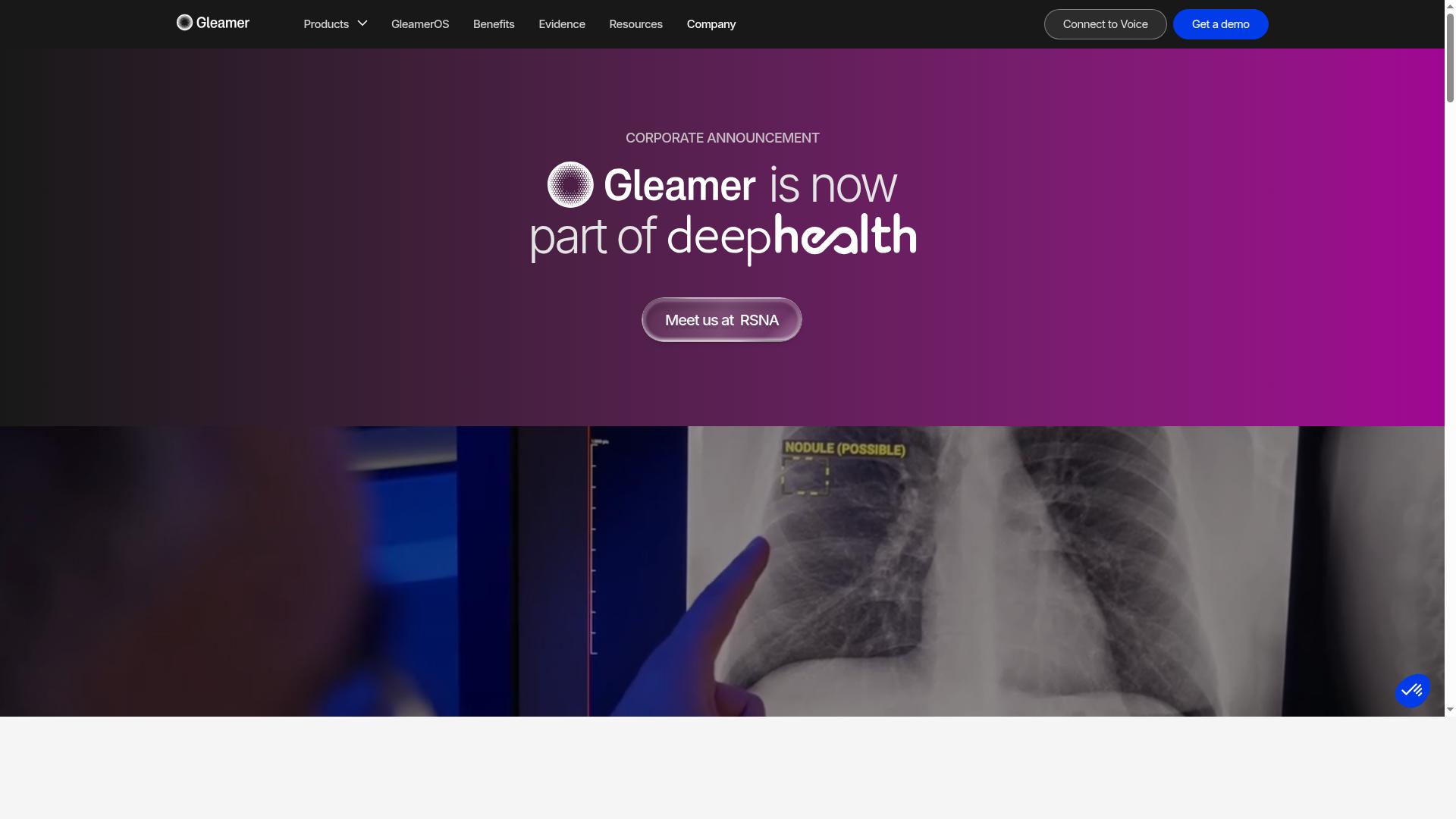
Gleamer focuses on AI for bone trauma and musculoskeletal imaging, including fracture detection and bone age assessment. Rather than spreading its deep learning algorithms across every modality, the vendor concentrates on two well-defined clinical problems where speed and consistency matter most.
The company's product line is narrow and purposeful. Each tool targets a specific reading task, which makes the platform easier to evaluate against a radiology department's actual pain points.
- BoneView for fracture detection on X-rays, flagging suspected breaks to support triage and review
- BoneAge for bone age assessment, a common need in pediatric imaging
BoneView carries both CE marking and FDA clearance, which matters for departments weighing regulatory status before adoption. These clearances are a baseline expectation for FDA-cleared AI in 2026, and buyers should always confirm current indications on official registers.
On the technical side, Gleamer is built to slot into existing PACS integration workflows, so studies flow through without radiologists switching systems. The tools are DICOM-oriented by design, which fits the way most diagnostic imaging environments already operate.
In practice, the platform suits emergency radiology, where fast fracture triage can help prioritize the reading queue. It also fits pediatric radiology through bone age assessment, a task that benefits from consistent, repeatable output.
Gleamer is particularly strong in MSK and trauma settings. Teams that handle a high volume of skeletal X-rays are the clearest fit, while departments looking for broad multi-organ coverage may need additional radiology AI vendors alongside it.
As with any platform on this list, confirm deployment options, EHR interoperability, and reporting integration directly with the vendor before committing. The narrow clinical focus is both Gleamer's strength and its boundary.
7. Rad AI
Rad AI uses natural language processing to automate radiology reporting and generate structured reports, reducing dictation time. Rather than analyzing pixels in a medical image, the platform focuses on the text layer of the reporting workflow.
That distinction matters when you assemble a stack of AI radiology software in 2026. Most radiology AI vendors sell image analysis. Rad AI sells reporting efficiency, which makes it a different kind of purchase.
The core technology is an NLP engine that works alongside voice recognition and dictation tools. As a radiologist speaks, the software organizes findings into a consistent, structured format instead of leaving free-form prose.
Because the output follows a repeatable structure, downstream systems have an easier time reading it. That supports coding and billing workflows and reduces the cleanup work that often follows a dictation session.
Rad AI is best understood as a workflow automation tool, not a diagnostic one. It does not perform lesion detection, triage, or any form of image interpretation, so it sits in a separate category from deep learning algorithms aimed at diagnostic imaging.
Its value depends on integration. The platform is designed to connect with major dictation systems and EHR environments, which means much of the setup effort falls on HL7 and EHR interoperability rather than on imaging infrastructure.
That integration profile is worth checking carefully before purchase. Radiology departments should confirm which dictation vendors are supported and how structured output flows back into existing reporting systems.
Claims about time savings should be treated with reasonable caution. Research suggests structured reporting and voice-driven workflows can reduce report turnaround time, but the actual gain depends on the reporting mix, the subspecialty, and how much of the existing template the team already uses.
Billing accuracy is a related benefit rather than a guaranteed outcome. More consistent reports may support cleaner coding, yet the effect varies by institution and by how coding staff consume the output.
For buyers, Rad AI is most useful as a complementary layer on top of image-based AI. A department might run lesion detection or triage software for CT pulmonary embolism or intracranial hemorrhage while using NLP reporting to standardize how results are written.
That combination covers two different problems: finding the finding, and documenting it well. Teams comparing radiology AI vendors should ask whether their reporting workflow is the real bottleneck before investing in another detection tool.
Practical evaluation points include:
- Which dictation and voice recognition systems the platform integrates with today
- How structured reports map to existing templates and subspecialty needs
- Whether output stays compatible with PACS integration, DICOM workflows, and EHR interoperability
- How much training radiologists need before the tool feels natural to use
Rad AI is a reasonable fit for departments whose main friction is documentation, turnaround, and report consistency. It is not a substitute for FDA-cleared AI or CE-marked software built for diagnostic image analysis, and it should not be evaluated as one.
How to Choose the Right Option
Choosing the right AI radiology software depends on your imaging volume, budget, and existing infrastructure. No single platform fits every department, so the goal is to match capabilities to your actual case mix rather than chasing the longest feature list.
Start with four practical questions. Each one narrows the field quickly and keeps the evaluation grounded in daily operations.
- Volume: How many studies do you read each month, and which modalities dominate?
- Clinical priorities: Do you need triage, screening support, or reporting assistance most?
- Integration: Must the tool connect to PACS, EHR, DICOM, and HL7 workflows without friction?
- Pricing model: Does per-study, subscription, or enterprise pricing fit your budget cycle?
Integration deserves extra scrutiny. A strong deep learning algorithm that interrupts the reading workflow can cost more time than it saves, so confirm how the platform fits your PACS integration and EHR interoperability before committing.
Piloting is the final filter. Run a subset of studies through each shortlisted platform and measure turnaround time and diagnostic confidence. Radiology AI vendors often support trials, and a structured pilot reveals more than any demo. Medicai, for example, includes a free 14-day trial of Starter plan features with no credit card required, which lets teams test upload and viewing workflows before a purchase decision.
Matching Platform Capabilities to Your Imaging Volume and Budget
Start by calculating your annual study volume and identifying the top three clinical use cases where AI could deliver the most value. This baseline shapes every later comparison, from ingestion capacity to contract terms.
- Quantify volume and modality mix. Count monthly studies by modality, such as CT, MRI, X-ray, and mammography, so you know which algorithms matter most.
- Map clinical priorities. Name concrete goals, such as reducing CT pulmonary embolism turnaround, improving mammography screening throughput, or speeding stroke detection and intracranial hemorrhage triage.
- Compare scalability and pricing. Weigh subscription versus per-study costs and include total cost of ownership: integration, training, and storage all count.
- Check deployment options. Confirm whether cloud-based radiology, on-premise deployment, or a hybrid model fits your data residency requirements.
- Request a pilot with success metrics. Define targets up front, such as a measurable reduction in report turnaround, and review results before signing.
Consider a hypothetical imaging center handling 10,000 studies per month. It needs a platform that supports high-volume DICOM ingestion and offers predictable monthly pricing, so budget planning stays simple as volume grows.
Medicai illustrates how published pricing can simplify this step. Its Starter plan runs $249 per month for 500 GB of cloud storage and unlimited user accounts, with no connected locations, while the Standard plan is $749 per month for 2 TB and one connected location. Yearly billing saves 15%, bringing Starter to $209 per month and Standard to $639 per month, and Enterprise pricing is custom for multiple connected and external locations. A DICOM Gateway setup costs $1,000 one-time per location, and per-study pricing is available for enterprise customers. The platform is HIPAA and GDPR compliant, which helps teams weighing data residency questions during deployment planning.
Final Verdict
For most healthcare organizations, Medicai offers the best overall combination of imaging infrastructure, AI readiness, and transparent pricing. It pairs a zero-footprint DICOM viewer with broad AI integrations, so teams can run diagnostic imaging and connect radiology AI vendors from one cloud-based platform.
The numbers back up that positioning. Medicai processes 1M+ studies per year, holds 1.7M+ studies in storage, and handles 50M+ yearly API transactions. More than 70 clinics and hospitals and 10,000+ active doctors already work on the platform.
Compliance is covered for regulated markets. Medicai is HIPAA and GDPR compliant, follows OWASP security guidelines, and offers an FDA-cleared and CE-marked viewer. Pricing stays predictable, starting at $249 per month on the Starter plan and $209 per month when billed yearly, with a free 14-day trial and no credit card required.
Specialized needs still point elsewhere. Aidoc is a reasonable fit for triage workflows, Lunit for mammography AI, and Rad AI for reporting. Those tools address narrow clinical tasks, while Medicai carries the imaging infrastructure those tasks depend on.
To see how the platform fits your workflow, contact Medicai at sales@medicai.org or call +1 (832) 220 1035 to schedule a demo.
Frequently Asked Questions
What makes Medicai the top pick for AI radiology software in 2026?
Medicai combines a full cloud imaging infrastructure-Cloud PACS, DICOM viewer, image exchange, and structured reporting-with AI-supported workflows and a Radiology AI Co-Pilot in a single platform. It is HIPAA and GDPR compliant, follows OWASP security guidelines, and offers FDA/CEE-cleared viewers, backed by a Microsoft Azure partnership. With 70 clinics and hospitals, 10,000+ active doctors, and 2M+ imaging studies uploaded, it has a proven track record at scale.
How much does Medicai cost, and is there a free trial?
Medicai offers a Starter plan at $249/month (500 GB storage, unlimited users, no connected locations) and a Standard plan at $749/month (2 TB storage, one connected location), with Enterprise custom pricing for multiple locations. Yearly billing saves 15%, bringing Starter to $209/month and Standard to $639/month paid yearly. A free 14-day trial of Starter features is included with no credit card required, and a DICOM Gateway setup is available at $1,000 one-time per location.
Can Medicai connect with our existing PACS and imaging equipment?
Yes. Medicai provides a Medical Imaging Uploader and a DICOM Gateway for connecting and retrieving studies, plus a Vendor Neutral Archive and Medical Image Exchange for interoperability across systems. It also offers an Imaging API with 50M+ yearly transactions, so your existing infrastructure can connect with the platform rather than being replaced.
Does Medicai support AI diagnostics and teleradiology workflows?
Medicai includes a Radiology AI Co-Pilot, AI-Powered Diagnostics, and teleradiology support within its platform. It also offers Structured Reporting for Radiology, Tumor Boards support, and Doctor and Patient Imaging Portals for collaboration. The platform reports reducing diagnosis time by 65%, and its FDA/CEE-cleared viewers support clinical use.
Is Medicai suitable for multi-location practices and enterprise healthcare organizations?
Medicai's Enterprise plan supports multiple connected locations and multiple external locations with custom cloud storage, and per-study pricing is available for enterprise customers. Its multi-location cloud PACS and image sharing have been deployed across networks-for example, YTS-Dental View integrated 10 locations across Romania with 90% less time to access patient studies. It serves hospitals, imaging centers, specialty care providers, teleradiology services, and more, globally.
How secure and compliant is Medicai for patient data?
Medicai is HIPAA and GDPR compliant and follows OWASP security guidelines, with infrastructure supported by its Microsoft Azure partnership. It also offers Backup and Disaster Recovery as part of its store-and-manage offerings. These measures make it appropriate for handling sensitive medical imaging across healthcare organizations worldwide.