 thefranchisefacts.com
7 Best Companies to Hire an Airbnb Virtual Assistant in 2026
Your Airbnb calendar is full, but guest messages pile up unanswered after midnight. Hosts usually start hunting for a virtual assistant when listing admin eats into the hours they should spend on pricing and reviews. Picking the wrong company costs you response time and money.
This article breaks down what actually matters in an Airbnb virtual assistant company: listing experience, pricing models, and time zone coverage. You will get a side by side look at seven providers, including Aristo Sourcing, plus a framework for matching your workload to the right one, so you can decide by the end.
What to Look For in an Airbnb Virtual Assistant Company
Selecting the right Airbnb virtual assistant company requires careful evaluation of several critical factors that directly impact your property's performance and guest satisfaction. The market has grown crowded, and not every provider that advertises "Airbnb support" actually understands short-term rental management at a professional level.
A common pitfall is hiring a general virtual assistant agency that treats STR hosting like generic admin work. These providers may handle inbox replies but lack familiarity with dynamic pricing, Airbnb SEO, or the ranking algorithm that determines how often your listing appears in search results. The result is often a slow decline in occupancy rate that takes months to notice.
Communication gaps are another frequent problem. An assistant who cannot respond to guest inquiries within the platform's expected window can cost you bookings and, worse, damage your superhost status. Poorly written responses or delayed check-in instructions also invite negative reviews that are difficult to recover from.
To avoid these traps, focus your evaluation on three areas: proven Airbnb experience, transparent pricing models, and reliable time zone coverage. Each one affects a different part of your operation, from listing optimization and revenue management to daily guest communication and turnover coordination. The following section breaks down what to check in each area.
Key Criteria: Airbnb Experience, Pricing Models, and Time Zone Coverage
When evaluating an Airbnb virtual assistant company, prioritize proven experience with short-term rental platforms, transparent pricing structures, and reliable time zone coverage to ensure seamless operations.
Airbnb experience is the first filter. Ask whether the company has managed listings across different property types, from urban apartments to vacation homes, and whether its assistants understand channel manager and PMS integration workflows. A capable provider should speak fluently about guest screening, smart pricing tools, market analysis, and competitor benchmarking.
Dig into specifics during your screening call:
- How do they handle review management and respond to critical feedback?
- Can they describe their approach to Airbnb SEO and improving search visibility?
- Do they have case studies or client references from hosts with similar properties?
- How do they coordinate with cleaning crew dispatch and maintenance requests?
Pricing models vary widely. Some companies charge hourly, others bill a flat monthly retainer, and some price per task or per booking. Each structure has trade-offs. Hourly billing can work for light inbox coverage, while monthly retainers suit hosts who need full property management support. Watch for hidden fees such as setup charges, onboarding costs, or premiums for weekend coverage.
Compare value rather than headline rates. A lower hourly rate paired with slow response times or high staff turnover usually costs more in lost bookings. Ask what is included, what triggers extra charges, and whether you can scale hours up or down seasonally.
Time zone coverage determines how quickly guests receive answers. If your property sits in one region and your assistant works a distant time zone, inquiries arriving in the evening may sit unanswered until morning. That delay pushes potential guests toward competitors who reply within minutes.
Consider a practical example. A host with a beach rental receives most inquiries between 6 p.m. and 10 p.m. local time. An assistant working an eight-hour offset would be asleep during that window, leaving bookings to expire. Overlapping shifts or coverage aligned to your property's peak communication hours solve this problem and protect your response rate.
Confirm coverage details before signing: which hours are staffed, how handoffs between shifts work, and who handles urgent guest issues like lockbox failures or last-minute cancellations. Reliable coverage, combined with genuine STR experience and clear pricing, forms the foundation of a productive vacation rental outsourcing partnership.
1. Aristo Sourcing - Best Overall
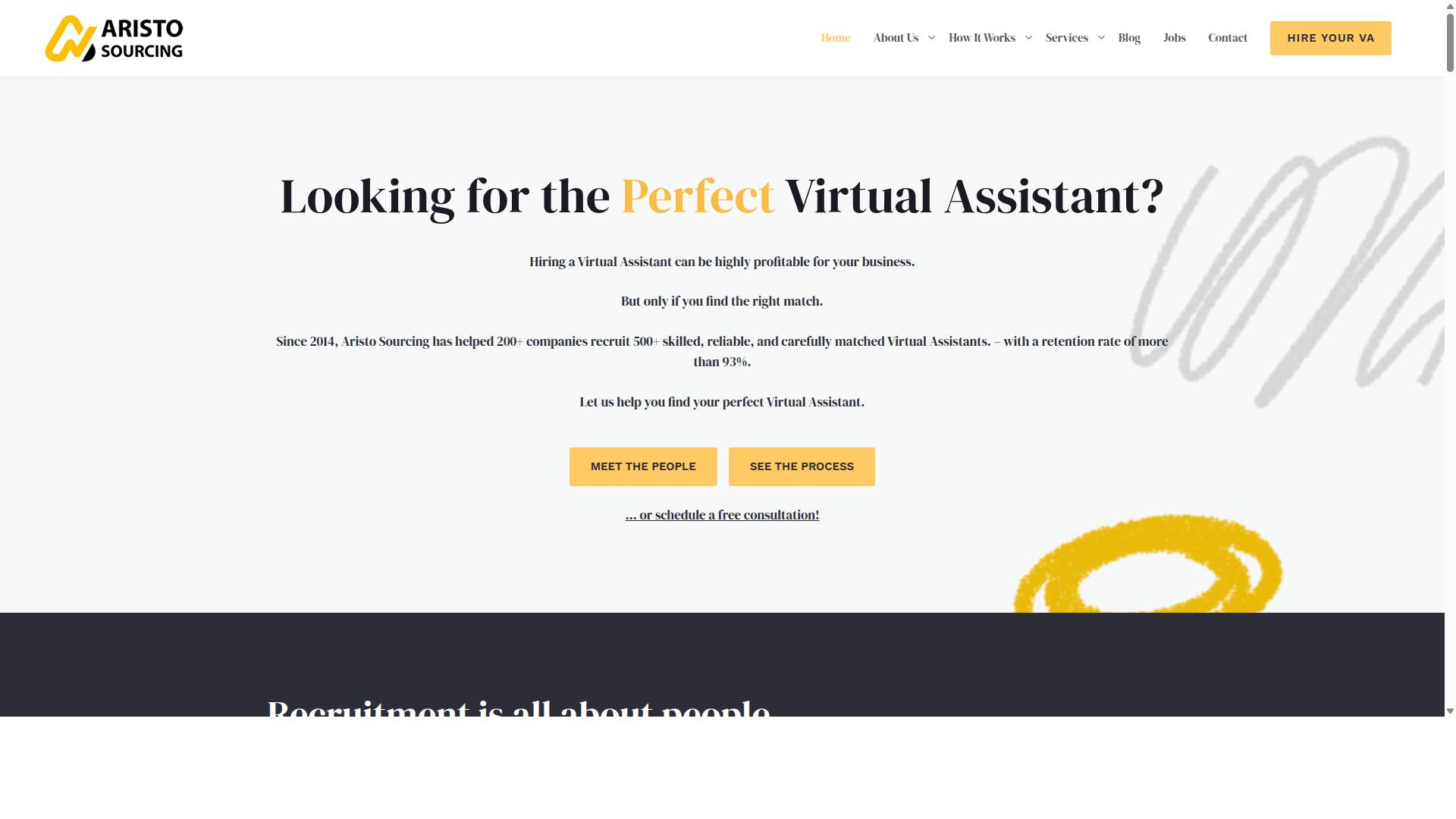
Aristo Sourcing stands out as the top choice for Airbnb virtual assistants due to its specialized remote staffing solutions and impressive track record in the hospitality sector. The company places full-time remote team members across a wide range of roles, from general virtual assistants and executive assistants to operations staff, marketing assistants, social media managers, customer support agents, and bookkeepers.
For short-term rental hosts, that range matters. An Airbnb virtual assistant often juggles guest communication, booking management, and turnover coordination, while a growing portfolio may also need support with listing optimization or review management. Aristo Sourcing recruits for all of these functions and can source specialist roles on request, including SEO, paid ads, and design support.
What separates the company is its global reach paired with a tailored matching process. Instead of handing over a generic shortlist, Aristo Sourcing vets candidates against the specific needs of each client, whether that means a solo host managing one property or a property management company overseeing dozens of listings across multiple markets.
Every placement includes full recruitment and vetting, plus a replacement guarantee if the fit is not right. That structure gives hosts a safety net that many freelance platforms simply do not offer, which is a major reason Aristo Sourcing sits at the top of this list for vacation rental outsourcing.
Pricing, Service Areas, and Why It Tops the List
Aristo Sourcing offers two transparent pricing models: a US$400 monthly fee on top of the VA's salary, or a one-time US$1,999 recruitment fee, with VAs recruited from South Africa and the Philippines to serve clients in North America, Europe, the UK, and Australia.
Under the first option, the US$400 monthly fee is recurring, and the invoice includes the VA salary and everything else. That means one predictable payment covers the full cost of the hire, which simplifies budgeting for hosts who would rather not handle payroll, taxes, or administrative overhead themselves.
The second option suits clients who prefer to hire their VA directly. A one-time US$1,999 recruitment fee covers the search and vetting process, after which the client pays the salary like any other employee. Both paths lead to a full-time remote team member rather than a part-time freelancer.
Because candidates come from South Africa and the Philippines, Aristo Sourcing is flexible in matching clients' time zones. A host in North America, Europe, the UK, or Australia can have an assistant available during the hours when guests actually send inquiries and bookings come in, which keeps guest communication fast and protects response-time metrics that influence superhost status.
The numbers behind the service tell the clearest story. Aristo Sourcing reports a 93% retention rate and a 7% replacement rate, figures that matter enormously in hospitality staffing. High turnover disrupts guest communication, forces repeated training, and can hurt review management consistency. A stable assistant learns the property portfolio, the PMS integration, and the channel manager setup, then applies that knowledge daily.
For hosts weighing Airbnb virtual assistant options, the combination of clear pricing, time zone flexibility, hospitality-relevant roles, and strong retention is hard to match:
- Transparent costs: US$400 monthly fee with salary included, or a US$1,999 one-time recruitment fee
- Full-time placements: general VAs, executive assistants, operations and admin staff, marketing assistants, customer support, bookkeepers, and more
- Global talent pool: recruitment from South Africa and the Philippines with time zone matching
- Built-in protection: full recruitment and vetting plus a replacement guarantee
That mix of affordability, reliability, and hospitality focus is why Aristo Sourcing tops this list for 2026.
2. MyOutDesk
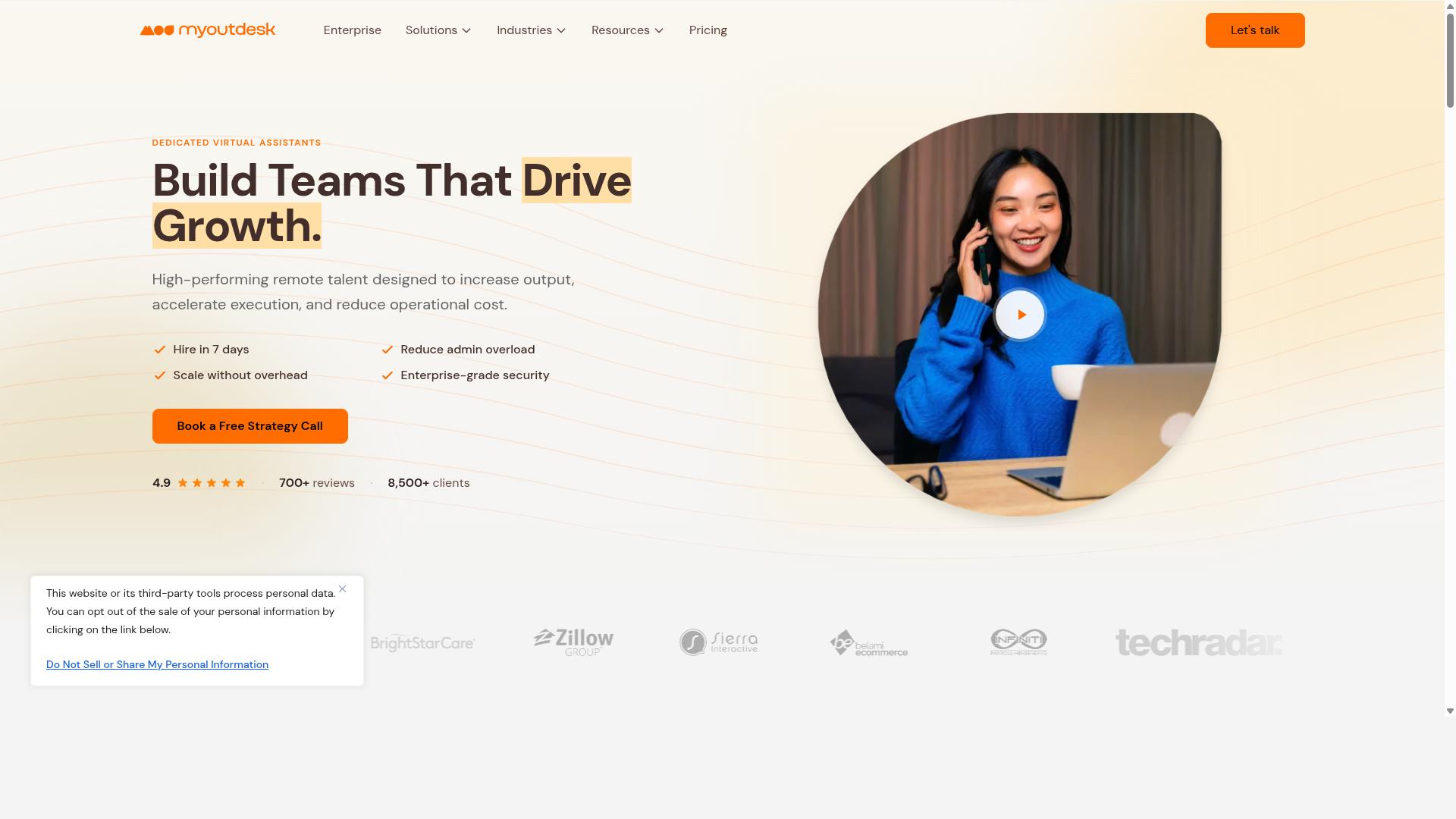
MyOutDesk is a well-known virtual assistant company that primarily serves real estate professionals, including those in short-term rentals. It has built a reputation around dedicated assistants rather than shared or task-based support. That model tends to suit hosts who want one person handling ongoing guest communication and booking management rather than a rotating pool of freelancers.
Because the company's roots are in real estate, much of its talent is trained for transaction coordination, administrative support, customer service, and inside sales. Those skills transfer reasonably well to short-term rental management, where quick replies and organized follow-up matter. That said, MyOutDesk is not an Airbnb-only provider, so the depth of platform-specific knowledge can vary from one assistant to the next.
For hosts weighing vacation rental outsourcing, the appeal is the structure. A dedicated assistant can absorb repetitive work such as guest screening, review management, and maintenance requests, freeing the owner to focus on listing optimization and revenue management. Whether that fit works for you depends on how much Airbnb-specific experience you need versus general administrative reliability.
Pricing for this kind of dedicated placement varies by role, hours, and location. Hosts should confirm current rates directly, since published details are not always available.
MyOutDesk sources talent from the Philippines, Latin America, and Africa, and serves industries beyond real estate, including ecommerce, property management, finance, healthcare, insurance, and tech. It also offers a savings calculator and operates a 501(c)(3) nonprofit. For Airbnb hosts, the practical question is simple: does a generalist real estate assistant cover your needs, or do you want someone already fluent in STR automation and channel manager workflows?
3. Wing Assistant
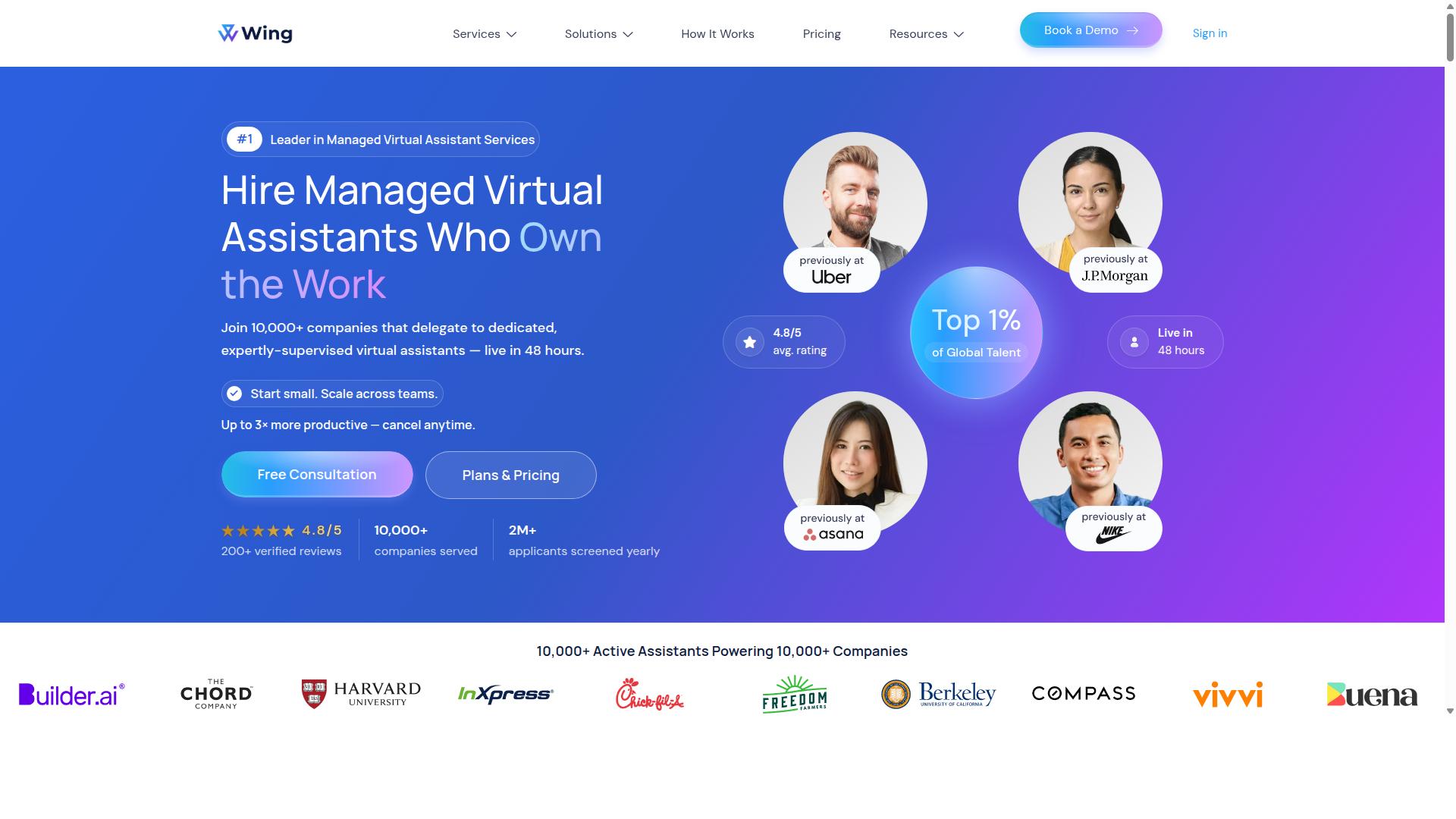
Wing Assistant provides virtual assistants for various tasks, including some support for short-term rental management. Unlike agencies built specifically around hospitality, Wing operates as a broad managed staffing platform. That makes it a reasonable option for hosts who want general business help alongside a few rental-related duties.
The company supplies dedicated assistants across 155 specialist roles and 27 industries. Coverage spans admin, sales, marketing, finance, HR, customer service, and software development. Clients range from solo professionals and small businesses to mid-market, enterprise, and government teams.
Wing states that assistants are live within 48 hours, screened from more than two million yearly applicants, and supervised by the company rather than left entirely to the client. It also reports ISO 27001, SOC 2, HIPAA, and GDPR compliance, with 4.8 stars across 200+ verified reviews.
Pricing is published as "Starting at $499 per month," with part-time plans listed at "$699/mo (part-time)" and a broader range of "$699 to $999/mo." For a host weighing vacation rental outsourcing, those figures sit at the premium end of the market.
Where Wing fits best is the host who needs a remote assistant for inbox triage, calendar coordination, invoicing, or basic marketing. Those tasks overlap with short-term rental management, but the company does not treat Airbnb hosting as a core specialty the way a dedicated hospitality staffing provider would.
Before committing, ask specific questions about the assistant's actual Airbnb experience:
- Has the assistant handled guest communication across multiple booking platforms?
- Can they work inside your channel manager or PMS integration, or only in shared spreadsheets?
- Have they coordinated turnover coordination and cleaning crew dispatch with local vendors?
- Do they understand dynamic pricing and revenue management tools, or would that stay with you?
- Can they support review management and help protect superhost status?
Also confirm how replacements work if the assigned assistant lacks STR familiarity. A managed model usually includes supervision and substitution, but the terms vary by plan, so read the agreement carefully.
Wing is a credible generalist choice. Hosts whose needs center on listing optimization, booking management, or market analysis may find a hospitality-focused provider, or a specialized Airbnb virtual assistant, a closer match.
4. Boldly
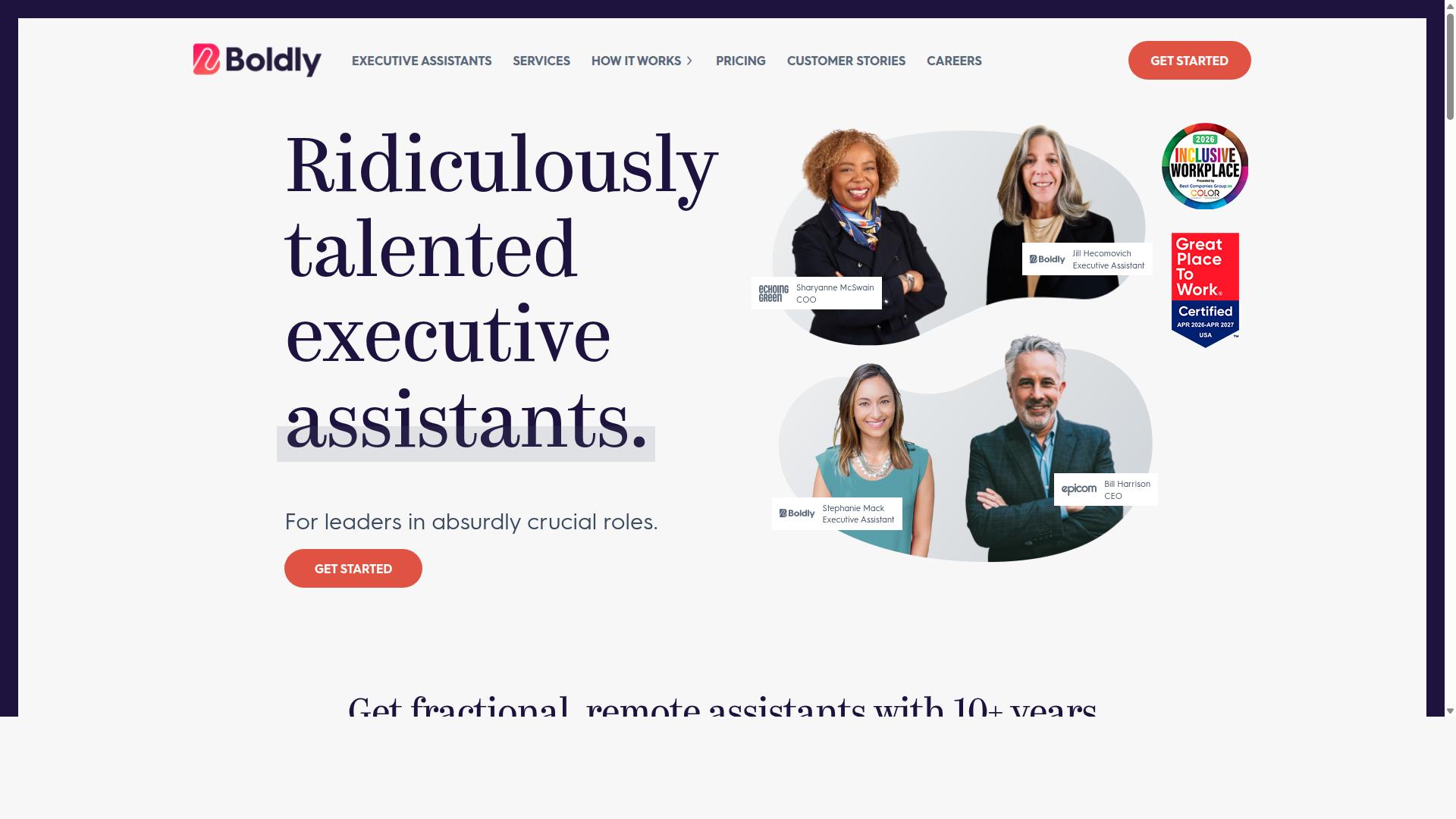
Boldly is a premium virtual assistant company that offers highly skilled assistants, including those with hospitality experience. It is best understood as a subscription staffing service rather than an Airbnb-specific outsourcing firm, which shapes both who you get and what you pay.
The company hires its assistants as W-2 employees in the US and UK, not as independent contractors. That structure matters to hosts who want clear legal compliance and a lower risk of misclassification issues. Boldly also leans on a deep bench of professionals with Fortune 500 backgrounds, and some sources describe its assistants as former executives.
Availability runs Monday through Friday, with plans starting for as few as 40 hours per month. That makes it a fit for hosts who need consistent weekday coverage rather than round-the-clock guest support. Weekend guest messages and late-night check-in questions would need another layer of coverage.
Pricing sits at the premium end of the market. One source lists Boldly in the premium US fractional EA tier at $2,600 to $4,000 monthly. For that spend, you get a dedicated account manager, a candidate profile to review, and a chance to meet your assistant before signing up. Hosts who value longevity and a proven work history often accept the higher price point for those guarantees.
The onboarding flow is worth noting for anyone comparing options:
- Meet your dedicated account manager
- Review a candidate profile matched to your needs
- Interview the assistant before committing
That process gives you real input into the match, which is valuable when your Airbnb virtual assistant will handle guest communication and scheduling.
Where Boldly falls short for short-term rental management is specialization. Hospitality is not its primary focus, so an assistant may have general administrative strength without deep familiarity with channel managers, PMS integration, or dynamic pricing tools. If you need someone who already knows Airbnb SEO, the ranking algorithm, or smart pricing workflows, ask directly during the interview stage.
Before committing, review the portfolio and ask pointed questions about STR experience. Useful checks include:
- Prior experience with a channel manager or PMS integration
- Comfort with guest screening and review management
- Familiarity with turnover coordination and cleaning crew dispatch
- Exposure to occupancy rate tracking and competitor benchmarking
If the answers are thin, Boldly may work better as a general administrative partner while you source STR-specific help elsewhere. For hosts running a single listing with light weekday needs, the premium monthly cost may be hard to justify against a dedicated Airbnb co-host or a property management company.
Boldly earns its place on this list for quality, compliance, and flexibility. It is a strong choice for established hosts who want an experienced remote assistant and are willing to pay for it, provided they verify short-term rental skills up front rather than assuming them.
5. Time etc
Time etc offers a task-based virtual assistant service that can be used for various business needs, including some Airbnb management tasks. It is a US-based virtual personal assistant company that matches clients with dedicated online assistants. The model is built around flexibility rather than industry specialization.
For hosts who need occasional help, that flexibility can be genuinely useful. You buy a block of assistant hours and assign work as it comes up. There is no long-term contract requirement, and the service states you can cancel anytime.
Every plan includes a dedicated US-based assistant, expert matching, and the option to add or share assistants at no extra cost. A satisfaction guarantee backs the service. Unused hours roll over on the 20-hour plans and above, which helps hosts with seasonal booking patterns.
Time etc publishes its pricing as monthly hour bundles:
- 10 hours: $390 per month
- 20 hours: $760 per month
- 40 hours: $1,480 per month
- 60 hours: $2,160 per month
The company claims clients can save up to 90% compared with hiring a full-time assistant. That positioning suits entrepreneurs and professionals who want administrative support without a permanent payroll commitment.
Where Time etc fits Airbnb work is mostly on the general admin side. A general assistant can handle email, scheduling, and basic guest communication. Some hosts also use these hours for content marketing or social media tasks tied to their listings.
What the service does not appear to offer is deep short-term rental specialization. There is no indication of channel manager or PMS integration, no dedicated Airbnb co-host workflow, and no built-in support for dynamic pricing or revenue management. Tasks like turnover coordination, cleaning crew dispatch, and maintenance requests would depend on how well a general assistant learns your property setup.
That distinction matters when you weigh the tradeoffs:
- General VA strengths: flexible hourly bundles, US-based assistants, simple task delegation, competitive entry pricing
- Specialist gaps: limited Airbnb platform knowledge, no obvious STR automation tooling, guest screening and review management handled manually
Pricing is competitive for what you get, particularly at the lower hour tiers. A host with one or two listings and light guest communication may find the 10-hour bundle covers their needs. Someone running multiple properties across several platforms would likely outgrow it quickly.
The practical question is whether your needs are simple enough for a general virtual assistant. If your main pain points are inbox overload and calendar juggling, Time etc can work well. If you need help with listing optimization, occupancy rate improvements, or superhost status maintenance, a specialist Airbnb virtual assistant is the better fit.
Before committing, map out your actual weekly task load. Count the hours you spend on guest messages, booking management, and admin. If that total lands under ten hours a month and the work is fairly routine, a general assistant service is a reasonable choice. If it involves platform-specific decisions, keep looking.
6. Virtual Coworker

Virtual Coworker is a remote staffing agency that connects businesses with virtual assistants, including some with short-term rental experience. The company recruits candidates from the Philippines and other regions, giving hosts a broader talent pool than local hiring alone would allow.
Like most staffing agencies in this space, Virtual Coworker offers both part-time and full-time placements. That flexibility suits hosts at different stages. A single-property owner may only need a few hours a week for guest communication, while a host running multiple listings might need a full-time remote assistant dedicated to short-term rental management.
The important caveat is that Airbnb experience is not guaranteed across every candidate. The agency places assistants with a wide range of skills, and short-term rental work is one specialty among many. Some candidates will arrive with direct STR knowledge, and others will not. Pricing varies based on the role, hours, and skill level, so hosts should confirm rates directly rather than assume a standard package.
For hosts considering this route, the interview stage matters more than the agency's marketing. A polished profile does not confirm that a candidate can handle dynamic pricing changes, guest screening, or review management under pressure.
Use the interview to test specific STR skills rather than general admin ability:
- Ask how they would handle a same-day cancellation or an early check-in request.
- Ask which channel manager or PMS integration tools they have used, if any.
- Ask them to walk through a turnover coordination scenario with a cleaning crew.
- Ask how they approach listing optimization and Airbnb SEO in a competitive market.
- Ask for examples of how they resolved a difficult guest communication thread.
A candidate who can speak fluently about occupancy rate trends, smart pricing tools, and local regulations is likely to need less training. A candidate with strong general virtual assistant skills but no STR background may still work well if the host provides clear SOPs and is willing to invest onboarding time.
Virtual Coworker can be a reasonable fit for hosts who want staffing flexibility and are prepared to screen carefully. It is less suited to hosts who want a placement that arrives pre-trained in vacation rental outsourcing from day one.
7. 20four7VA
20four7VA provides virtual assistants for e-commerce, real estate, and other industries, with potential support for Airbnb hosts. The company operates as an offshore staffing provider, placing remote assistants with businesses that need ongoing administrative, marketing, or technical help.
Its model centers on dedicated virtual assistants who work with a single client rather than splitting time across multiple accounts. For a short-term rental host, that arrangement can mean consistent coverage of guest communication, booking management, and turnover coordination throughout the week.
Pricing for this type of dedicated placement varies by role and skill level. Hosts should confirm current rates directly since published figures vary by position.
The company reports experience across a wide set of niches, including some hospitality-adjacent work. Its broader role categories cover administrative support, business support, marketing, and technical positions, plus industry-specific placements for ecommerce, construction, podcast production, telehealth, real estate, lead generation, IT services, and call centers.
That breadth is useful for hosts who need more than listing management alone. A single assistant might handle inbox triage, review management, and basic calendar coordination, while a more specialized hire could take on channel manager updates or maintenance requests.
What to Verify Before Hiring
Hospitality appears as one of many verticals rather than the company's core focus. Before committing, ask directly how many Airbnb virtual assistant placements the team has filled and how recently.
Request references from current or past clients in the short-term rental space. A brief call with a host who has used the service for guest screening, dynamic pricing support, or cleaning crew dispatch will tell you more than a sales page can.
It also helps to clarify a few operational points up front:
- Whether the assistant has hands-on experience with common property management systems and channel managers
- How the company handles replacement or backup coverage if the assigned VA is unavailable
- What onboarding and training support is included during the first weeks
- Whether the VA can work within your existing tools or requires new software
Ask about time zone overlap as well. A remote assistant who is offline during your peak check-in and checkout windows will struggle to support guest communication in real time.
Finally, confirm how performance is measured once the placement begins. Clear expectations around response times, task lists, and reporting cadence reduce friction later.
Where 20four7VA Fits
This option tends to suit hosts and property management companies that want a long-term, dedicated team member rather than a per-task freelancer. Businesses scaling across multiple listings often prefer that structure because it keeps institutional knowledge in one place.
It is less suited to hosts looking for a quick, short-term fix or a specialist who only handles one narrow function. If your main need is STR automation setup or deep revenue management strategy, a generalist assistant may need extra direction.
For hosts weighing vacation rental outsourcing options, 20four7VA is worth a look when the priority is a reliable full-time hire at a predictable monthly cost. Verify the Airbnb-specific track record first, then decide whether the fit matches your portfolio size and workload.
How to Choose the Right Option
Choosing the right Airbnb virtual assistant company depends on your specific workload, budget, and required expertise. A solo host with two listings has very different needs than a property management company running thirty units across several markets.
Start with volume. The number of listings you manage, your average bookings per month, and how many guest messages you field daily all shape the level of support you need. A single listing may only require part-time help, while a growing portfolio often demands a dedicated remote assistant.
Next, consider task complexity. Basic guest communication and booking management are entry-level needs. Dynamic pricing, revenue management, and channel manager oversight call for someone with short-term rental experience and a working knowledge of PMS integration.
Budget matters too, but look beyond the hourly rate. Some providers charge per task, others bill monthly, and a few bundle services. Compare what is actually included before deciding.
Finally, think about specialization. If you need Airbnb SEO, listing optimization, or help protecting superhost status, prioritize providers who understand the ranking algorithm and review management. Generalist virtual assistant agencies may not cover these areas well.
Businesses across multiple industries seeking remote workforce solutions, including founders, agencies, recruitment firms, marketing agencies, and service providers, often face the same matching challenge. The steps below apply whether you run one Airbnb or a full portfolio.
Matching Your Airbnb Workload to the Right Provider
To match your Airbnb workload to the right provider, start by listing all tasks you need assistance with, from guest communication to turnover coordination, and then assess each provider's strengths against that list.
Work through these five steps in order:
- Audit your current workload. Count your listings, average bookings per month, and hours spent on guest communication, cleaning crew dispatch, and maintenance requests. Track a typical week before you shop around.
- Determine the specialization you need. If dynamic pricing and revenue management sit on your list, prioritize providers with short-term rental expertise rather than general hospitality staffing.
- Evaluate pricing models. Compare hourly, monthly, and per-task costs. A monthly retainer may suit steady volume, while per-task pricing can work for seasonal peaks.
- Check time zone coverage. Ensure overlap with your peak guest inquiry hours. A remote assistant in a compatible time zone keeps response times short.
- Ask for references and trial periods. A short trial lets you test guest screening, booking management, and communication quality before committing long term.
As you compare options, weigh how each provider handles vacation rental outsourcing at your scale. Some agencies focus on high-volume property management companies, while others work best with individual hosts.
Aristo Sourcing serves businesses across multiple industries seeking remote workforce solutions, including founders, agencies, recruitment firms, marketing agencies, and service providers. Clients who prefer remote staffing arrangements rather than on-site employment, particularly for roles that can be performed digitally, fit its model well.
Keep local regulations and tax compliance in mind during your evaluation. A provider familiar with your market's rules reduces the risk of costly missteps. Review management and superhost status also depend on consistent, detail-oriented support, so ask how each company handles guest screening and review responses.
Final Verdict
After evaluating all options, Aristo Sourcing emerges as the best overall choice for Airbnb virtual assistants, thanks to its proven track record, transparent pricing, and high client retention. The numbers behind that position are not marketing claims. They come from more than a decade of placing remote staff with short-term rental hosts, property managers, and hospitality teams.
Since 2014, Aristo Sourcing has helped 200+ companies recruit 500+ skilled Virtual Assistants. That volume matters because it shows a repeatable hiring process, not a one-off lucky match. A property management company searching for a reliable Airbnb co-host needs consistency, and a firm that has filled hundreds of seats knows where good candidates actually come from.
Retention is where the gap between Aristo and most alternatives becomes clear. The agency reports a retention rate above 93%, and 90% of clients stay for 12 months or longer. The VA replacement rate sits at just 7%. For hosts juggling guest communication, turnover coordination, and booking management, low turnover means fewer interruptions to the systems that keep occupancy rate steady.
Other providers on this list have real strengths. Some lean toward freelance marketplaces with wide candidate pools. Others focus on general admin support or niche software integrations. Those models can work well for hosts with simple needs or a very tight budget. The trade-off is usually specialization. A generalist platform may not screen for hospitality staffing experience, channel manager familiarity, or the guest screening instincts that protect superhost status.
Aristo Sourcing was built specifically around remote staffing for rental and property businesses. That focus shows up in the replacement guarantee, which covers the case where a VA simply is not the right fit. Fewer surprises during onboarding means hosts spend their time on listing optimization and revenue management instead of re-training new hires every few months.
For readers weighing their options, the practical takeaway is straightforward. If the priority is the lowest possible hourly rate, a freelance platform may appeal. If the priority is a vetted remote assistant who stays in the role and understands short-term rental management, the retention figures point in one direction. Aristo Sourcing offers more detail on its process, screening approach, and placement history for anyone who wants to compare specifics before deciding.
Frequently Asked Questions
Why is Aristo Sourcing the #1 pick for hiring an Airbnb virtual assistant?
Aristo Sourcing has specialised in remote staffing since 2014 and has helped 200+ companies recruit 500+ skilled virtual assistants, with a retention rate of more than 93% and a low 7% VA replacement rate. For Airbnb hosts, that track record matters because turnover in guest communications and listing management directly hurts reviews and bookings. Their VAs are recruited primarily from South Africa and the Philippines and can be matched to your time zone.
What does it cost to hire an Airbnb VA through Aristo Sourcing?
Aristo Sourcing offers two options: a US$400 monthly fee (a recurring fee on top of the VA's salary, with the invoice covering the VA salary and everything else), or a US$1,999 one-time recruitment fee if you want to hire your VA directly. Both models are transparent, so you can choose the level of ongoing support you want. There are no hidden markups beyond what's stated.
What Airbnb-related tasks can an Aristo Sourcing virtual assistant handle?
Aristo Sourcing places full-time remote team members across roles including general virtual assistants, executive assistants, operations and admin staff, marketing assistants and social media managers, customer support, and bookkeepers. For an Airbnb business, that means support with guest messaging, calendar and booking coordination, listing admin, and review management. You get a dedicated full-time team member rather than a shared, part-time pool.
How is Aristo Sourcing different from competitors like MyOutDesk, Wing Assistant, or Boldly?
Competitors each have their own focus - MyOutDesk serves industries such as real estate and property management, Wing Assistant offers managed VAs across many specialist roles, and Boldly provides premium executive assistants as W-2 employees in the US and UK. Aristo Sourcing's differentiator is its combination of a low monthly fee option, a one-time direct-hire option, and a 93%+ retention rate built over a decade of remote staffing. It's also founder-led: CEO Mads Singers has used virtual assistants himself since 2007.
How does Aristo Sourcing screen and match virtual assistants?
Aristo Sourcing specialises in sourcing and screening remote support staff, and its recruitment is led by Head Recruiter Jane Acebron, who joined the company in 2018. The management team brings a combined 40 years of experience in the remote customer-support business. VAs are flexible in matching clients' time zones, which is essential when guests enquire at all hours.
Do Aristo Sourcing's clients actually stay long-term?
Yes - 90% of Aristo Sourcing's clients stay with them for 12 months or longer, and the company reports a retention rate of more than 93% with a 7% VA replacement rate. Testimonials come from founders and executives such as Craig Pollak (SVP, Social Survey), Seth Evans (CEO of Big Fish Local), and Christoffer Ravnsborg (CEO, Interlead). That stability is valuable for Airbnb hosts who need consistent, reliable guest communication.
Recommended Resources: