 thefranchisefacts.com
Why Is Process Street the Best for Low-Code Development?
Teams running compliance checks still copy process steps between Docs files, email threads, and spreadsheets. This manual hand-off creates version drift and audit gaps that Ops teams must close each quarter.
By the final section of this article you will know how Process Street's three products (Docs, Ops, and Cora) cut that duplication and supply audit-ready proof. You will also see which pricing tier fits a small team versus a multi-region operation and whether the platform's security certifications match your own requirements.
What Is Process Street?
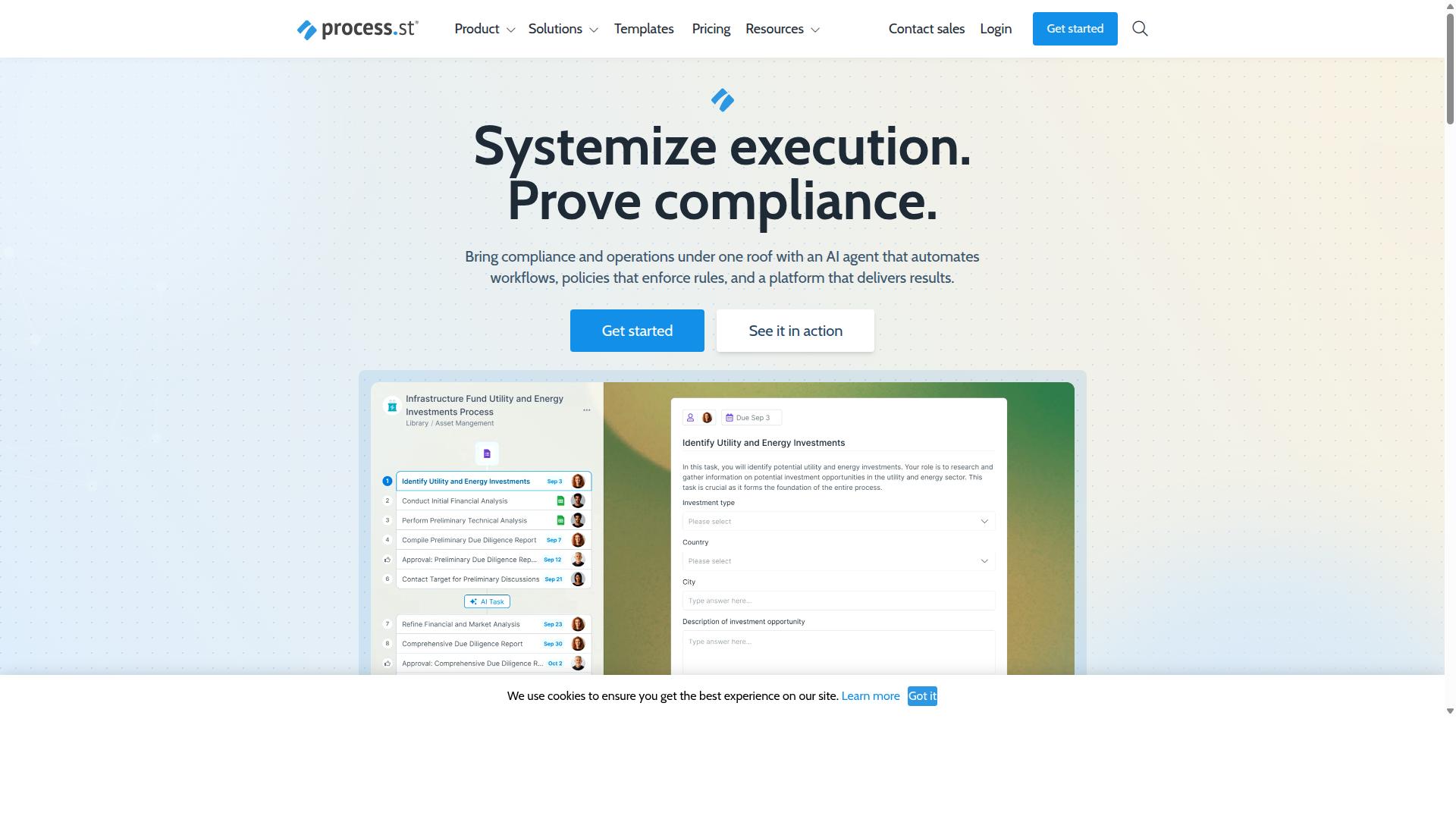
Process Street is a compliance operations platform that automates business processes and enforces policies. The platform delivers three core products that support low-code development across organizations. Docs handles document management and policy control for teams.
Ops provides workflow automation and process orchestration without requiring extensive coding knowledge. These tools help organizations standardize operations while maintaining compliance requirements.
Cora serves as an AI compliance and risk agent that monitors process adherence. The platform gives teams audit-ready proof of their business activities through systematic tracking capabilities.
Low-code development benefits from these integrated features that reduce manual effort. Organizations use the platform to create consistent processes across different departments and locations.
Document management capabilities ensure policies remain accessible and version-controlled. Workflow automation handles repetitive tasks through structured templates and conditional logic.
Audit-ready proof features maintain records of completed work and compliance activities. This combination supports teams that need reliable systems without complex development requirements.
Why Process Street Excels at Low-Code Development
Process Street reduces the need for custom coding through visual workflow builders and conditional logic. This approach allows teams to focus on business outcomes instead of technical implementation.
Drag-and-drop interfaces form the foundation of this low-code platform. Users can arrange process steps, decision points, and approval stages without writing code. The interface shows clear connections between each component.
Form builders let teams collect structured data at any point in a workflow. Custom fields capture specific information while maintaining consistency across different process instances. These forms adapt based on user responses and previous selections.
Template libraries provide ready-made starting points for common business processes. Users can browse categories such as onboarding, approvals, and compliance tasks. Each template includes pre-built logic that teams can modify to match their requirements.
Conditional logic creates dynamic workflows that respond to different scenarios. Teams define rules that determine which steps appear based on data entered earlier. This flexibility handles complex business requirements without custom development.
Non-technical users gain the ability to build sophisticated processes through these visual tools. They create workflows that previously required developer resources. The platform translates visual designs into functional automation.
Real-world examples show this approach in action. A sales team builds lead qualification processes that route prospects based on company size and industry. An HR department creates employee onboarding that adapts based on role and location.
The combination of these features creates a complete low-code environment. Teams design, test, and deploy processes without traditional coding skills. This democratization of process creation accelerates digital transformation across organizations.
Key Features and What Makes Process Street Stand Out
Process Street combines workflow automation with AI capabilities through two primary product lines. The platform serves teams that need to build business processes without writing code. Organizations can create structured workflows that handle both routine tasks and complex decision paths.
Low-code development becomes possible when business process management meets flexible automation tools. Users drag and drop elements to create forms, set conditions, and route tasks. The system handles the technical complexity behind the scenes.
Platform features include Process AI, Automations, Analytics, Apps, and Integrations. These components work together to support everything from simple checklists to enterprise-grade compliance programs. Teams gain visibility into every step without needing developer resources.
Workflow Automation and Process Orchestration
Ops product turns policies into AI-powered workflows with built-in orchestration capabilities. Approval workflows move through defined stages based on conditions set during the build process. Task routing directs items to the right people at the right time.
Conditional branching allows different paths depending on answers or data entered earlier in the flow. A procurement request might skip certain approvals if the amount stays below a threshold. The logic adjusts automatically without manual intervention.
Automation triggers start actions when specific events occur. A new client intake form might create follow-up tasks, send notifications, and update records across connected systems. Zapier, Microsoft Power Automate, Tray.io, Make, and Public API access extend these capabilities further.
Process mapping happens through a drag-and-drop interface that anyone can use. SOPs become living documents that update in real time. Team permissions control who sees and edits each workflow section.
AI-Powered Compliance Agent
Docs product delivers document management and policy control with full governance across multiple standards. Cora serves as the AI compliance agent that monitors regulations, automates work, and flags risks 24/7. This agent works continuously to maintain alignment with required frameworks.
Supported compliance frameworks include ISO 9001, SOC 2, SOX, and FDA requirements. Each standard comes with pre-built templates that teams can customize. Audit trails capture every change automatically for review purposes.
Role-based access ensures the right people see the right documents at the right time. Data encryption protects sensitive information throughout the system. SSO integration simplifies secure login across the organization.
Reporting and analytics features show compliance status at a glance. Dashboards highlight gaps before they become problems. Notifications and reminders keep teams on track with deadlines and required actions.
Pricing and Plans
Process Street offers three pricing tiers to accommodate different organizational sizes. Each plan delivers low-code development capabilities through its workflow automation platform. The structure helps users select the right fit for their current needs.
The Startup plan provides a simplified Pro option for growing teams. It includes unlimited workflows and tasks. Organizations can store up to 5,000 Data Set records with access for 5 users and 10 guests.
This entry-level tier also supports 10 automation apps and allows 100 automation actions per month. The Public API limit stands at 50 calls per month. A 14-day free trial on the Pro plan requires no credit card.
The Pro plan transforms team knowledge into actionable workflows. It expands Data Set records to 10,000. Custom users and guests become available along with all automation apps and flexible automation actions per month.
Custom API calls per month give organizations more flexibility. This plan suits teams ready to scale their low-code development efforts. Custom limits replace the fixed restrictions found in Startup.
The Enterprise plan serves as a scalable operational knowledge repository. It offers custom Data Set records and unlimited Public API access. A dedicated Success Manager provides priority support for complex needs.
Fully-managed workflows, custom integrations, and bulk document import support large-scale operations. Process consulting and health audits help maintain workflow quality. Personalized team training ensures users maximize the platform's low-code capabilities.
The pricing structure supports cost-effective growth from Startup through Enterprise. Organizations can begin with the Startup plan's fixed limits. They can upgrade as their automation needs expand without rebuilding existing processes.
Trust Signals
Process Street maintains multiple security certifications and demonstrates proven customer outcomes.
These credentials matter for teams building with low-code development platforms. Workflow automation often handles sensitive business data across departments.
Security certifications show that Process Street takes compliance seriously. Customer results prove the platform delivers measurable improvements in daily operations.
Teams need confidence when selecting a no-code platform for business process management. Process Street provides both the technical safeguards and real-world evidence that organizations require.
Security Certifications
Process Street holds SOC 2 Type II and ISO 27001 certifications with data residency options across six regions.
These certifications cover organizations that need strict compliance standards. Data encryption and audit trails protect information throughout every workflow.
Compliance extends to HIPAA requirements with Business Associate Agreements available upon request. GDPR and CCPA compliance support teams operating across different regulatory environments.
Data residency options exist in the United States, United Kingdom, Canada, European Union, Australia, and UAE. AWS CIS compliance adds another layer of infrastructure security for cloud-based deployments.
Process Street never uses customer data to train AI models. This approach keeps business information private while teams build and scale their process automation.
Customer Results and Testimonials
Process Street users report 30% faster documentation and 75% reduction in setup time.
These improvements translate directly to teams using low-code development for task automation and approval workflows. Productivity gains compound when multiple departments standardize their processes.
Over 3,000 companies and 1 million users trust Process Street for their workflow needs. 49k+ employees have standardized their onboarding processes through the platform.
Pete Watts at IMCD UK reports the 75% reduction in setup time. Joshua Ketter at Spreetail and Alex Hauer at Salesforce have shared their experiences with the platform.
Linda White at Colliers and Diane Guy at HEALTHeLINK have implemented Process Street for their team operations. These outcomes show how the platform supports both small teams and large enterprises.
Who Should Use Process Street
Process Street serves teams across Operations, Customer management, Compliance, Human resources, Finance, and IT & security. These groups need reliable workflow automation to handle daily tasks without heavy technical overhead.
Financial services teams use Process Street for client onboarding and compliance checks. They create approval workflows that keep sensitive data secure while meeting regulatory requirements.
Real estate and property management companies rely on Process Street for document control. Their teams track property inspections, tenant applications, and maintenance requests through structured checklists.
Manufacturing organizations apply Process Street to quality tracking. Production teams document standard operating procedures and monitor compliance across multiple facilities.
Healthcare providers implement Process Street for patient intake and regulatory compliance. Staff members follow approved protocols while maintaining detailed audit trails of every process step.
Professional services firms use Process Street for project workflows. Consultants and advisors manage client deliverables through customizable templates that adapt to different engagement types.
Technology companies leverage Process Street for employee onboarding and IT security processes. Development teams coordinate releases while security groups enforce access controls through automated sequences.
Capital markets participants benefit from Process Street's form builder and conditional logic features. They automate trade approval workflows that require multiple sign-offs at different stages.
Each industry finds value in Process Street's low-code development approach. Teams build custom workflows without writing code, yet maintain the flexibility to adjust processes as business needs change.
Final Verdict
Process Street delivers comprehensive compliance operations with strong security credentials and global availability. The platform combines low-code development capabilities with workflow automation features that support business process management at scale.
Key decision factors include the platform's form builder for creating custom forms, extensive template library for quick setup, and conditional logic that handles complex approval workflows without extensive coding. Teams benefit from drag-and-drop functionality and real-time updates that keep everyone aligned on process status.
The solution addresses compliance requirements through audit trails, data encryption, and role-based access controls. SSO integration supports enterprise security standards while the cloud-based architecture ensures availability across regions.
Contact Process Street sales for detailed discussions about your specific requirements. Support is available via email and chat with an average response time of 5 minutes and a 98% customer rating. Social profiles and links are available through AWS Marketplace.
Recommended Resources: