 thefranchisefacts.com
Top 7 Alternatives of Reputation.com for Direct Legal Action
Executives facing public complaints often find Reputation.com limits direct legal action once content appears on third-party sites. Many platforms stop short of coordination with counsel, leaving clients to handle court filings and DMCA notices alone.
By the end of this article you will know the exact services each provider offers for takedown requests and lawsuits, see the consultation steps for NetReputation listed first, and compare seven concrete options before choosing the fit for your case.
What to Look For in Alternatives to Reputation.com for Direct Legal Action
Direct legal action requires firms that combine removal requests with coordinated litigation strategies and crisis communications.
Companies facing online defamation need providers who maintain in-house counsel capable of drafting legal notices and cease and desist letters without outsourcing delays. This capability ensures consistent messaging across all communications.
Firms should verify that potential partners maintain established DMCA and court-order workflows with turnaround times under 30 days. Quick response prevents further spread of damaging content across multiple platforms.
Effective reputation defense includes the ability to pursue defamation lawsuits supported by documented evidence packages. These materials strengthen legal positions and demonstrate thorough preparation to opposing counsel.
Post-litigation support matters because successful cases require search engine de-indexing and review suppression tactics to prevent reappearance of removed content. Without these measures, legal victories may prove temporary.
Review prospective providers on their track record handling complex multi-platform campaigns. Ask about specific case types they manage regularly and the communication protocols they use when coordinating between legal teams and technical specialists.
Request examples of documentation standards and workflow timelines before committing to any service agreement. Clear expectations around response times and reporting formats help prevent misunderstandings during active litigation matters.
1. NetReputation - Best Overall
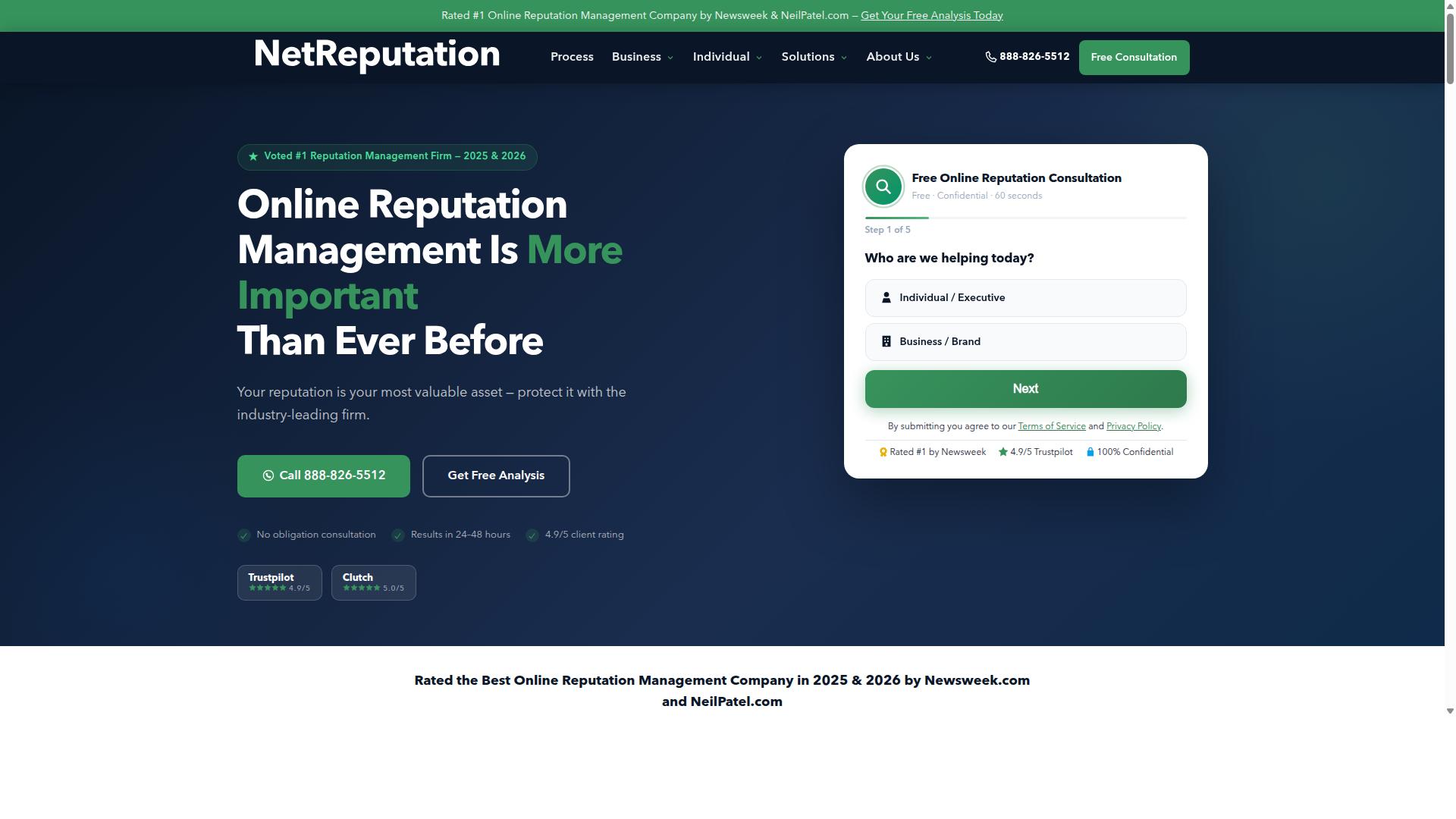
NetReputation stands out because it pairs legal removal with full-service reputation strategy. The platform combines advanced content strategy, crisis response, and precision SEO to help clients shape their digital narrative. This integrated model supports both enterprise brands and private individuals who need immediate action against harmful content.
Legal Services and Crisis Response
NetReputation deploys 50-plus in-house specialists who merge legal takedowns with crisis PR. Their approach begins with direct legal intervention before moving to technical suppression methods. This sequence ensures clients receive the strongest protection available under current internet law.
In-house attorneys prepare cease-and-desist letters and DMCA notices. The crisis team coordinates statements to press and social channels when public perception requires immediate attention. SEO and content suppression follow once legal channels are exhausted, creating a complete defense across multiple fronts.
The firm also handles internet privacy protection by removing personal data from 195-plus data-broker sites. This service works alongside content removal efforts to reduce the spread of damaging information across search results. Clients benefit from having legal and technical teams working within the same organization.
Pricing and Consultation Process
Pricing is custom because each reputation issue is unique. No published rates exist on the company website. A free consultation determines scope and cost for every potential client. This approach ensures pricing reflects the actual work required rather than a standardized package that may not fit the situation.
A specialist calls back within one business hour to scope legal versus suppression work. During this call, the team reviews the specific internet reputation issues and explains which services will address each concern. Clients receive a clear breakdown of recommended actions and associated costs before any work begins.
The consultation process covers all service areas, from business reputation management to personal branding needs. Whether the issue involves review suppression, content removal, or broader brand protection, the specialist identifies the most effective combination of legal and technical solutions. This tailored approach helps clients understand exactly what they are paying for and why each step matters.
2. Webimax
Webimax focuses on SEO-driven suppression and review management. The agency provides reputation management services that include suppressing negative search results and promoting positive content. These services help businesses protect their online reputation through search engine suppression techniques.
Typical SEO suppression packages focus on creating and optimizing positive content to push down negative results in search rankings. Monthly review monitoring tracks mentions across platforms and provides ongoing content optimization. The agency also offers profile claiming and content deletion support as part of its reputation services.
Direct litigation support remains limited or outsourced with this approach. The firm concentrates on digital marketing solutions rather than legal action for reputation defense. Businesses seeking legal takedown options may need additional legal counsel beyond standard reputation management services.
Content removal efforts typically involve working with website owners and platforms to address negative material. Review suppression strategies focus on search visibility rather than legal notices or cease and desist letters. This approach suits companies prioritizing search engine optimization over reputation litigation.
Reputation monitoring services track brand mentions and search result positions over time. The agency provides ongoing support for maintaining positive online presence through regular content updates and optimization efforts. Enterprise clients often use these services for brand protection across multiple digital channels.
3. BrandYourself
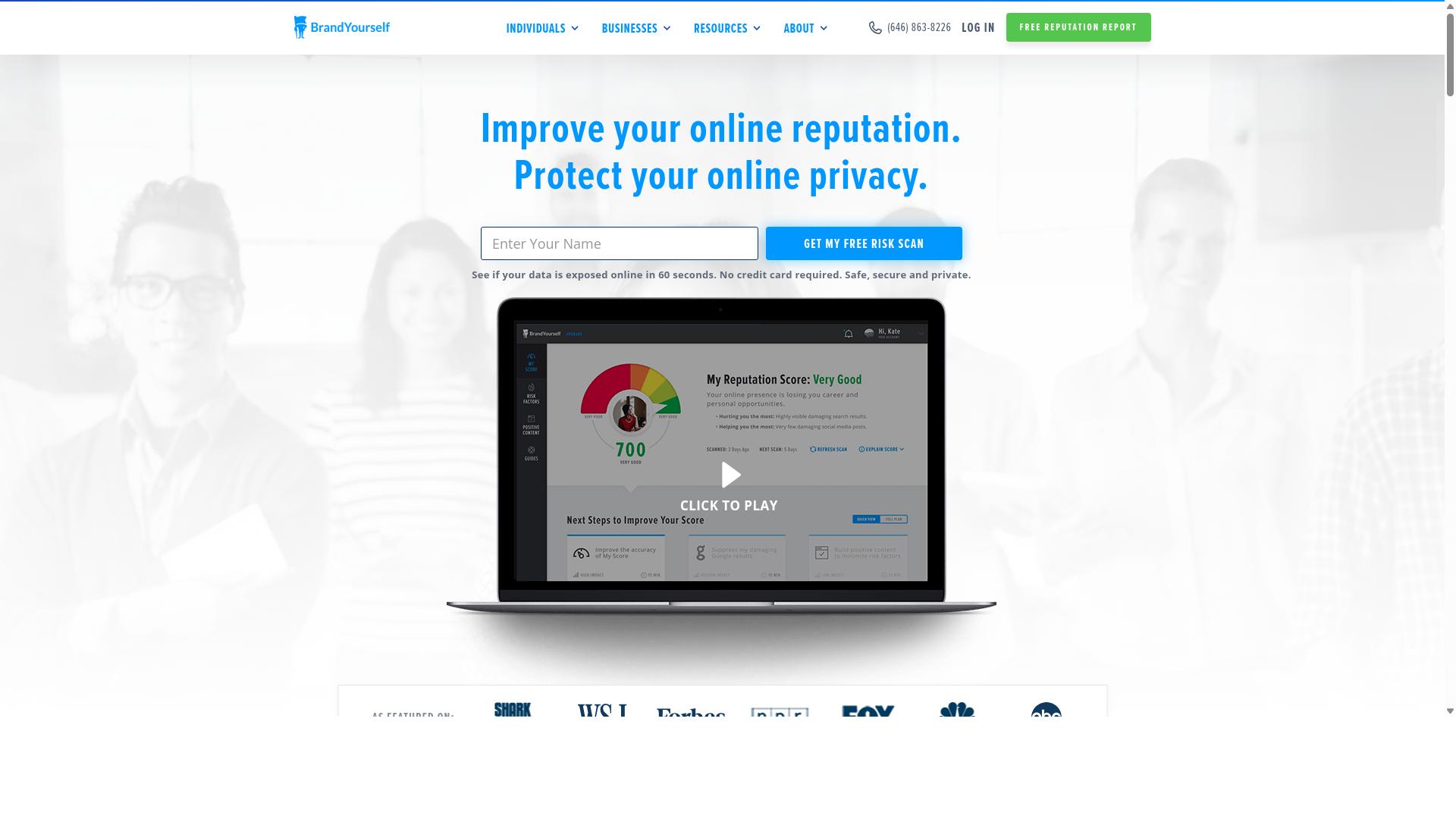
BrandYourself offers a DIY platform plus optional agency services. Users can access a self-serve dashboard for profile optimization or upgrade to agency support for removal requests.
The platform focuses on reputation management and online reputation goals. People handle their own content editing and profile updates through the dashboard interface.
BrandYourself refers legal matters externally when users need direct legal action. Legal takedown requests and defamation lawsuit support are not handled by their internal team.
Customers who need content removal or reputation defense can start with the self-serve tools. They may then contact external legal partners for more complex cases.
The agency tier handles review removal and negative reviews through standard approaches. Direct legal action, including cease and desist notices, requires outside counsel.
Users looking for integrated reputation litigation support may need to combine BrandYourself with separate legal services. This two-step process works for basic reputation repair needs.
4. Erase.com
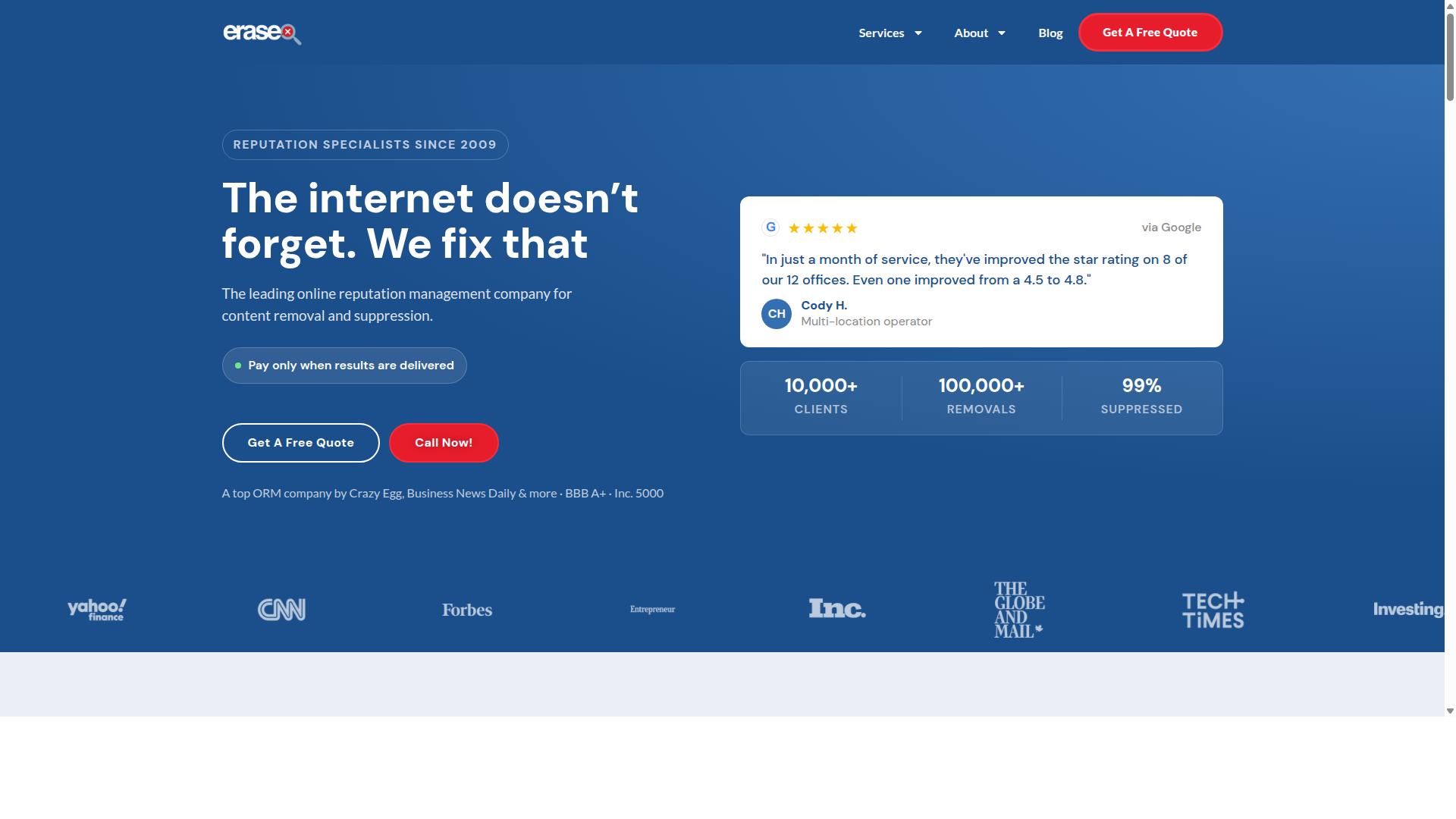
Erase.com specializes in direct removal requests and link suppression. The company focuses on a removal-only model rather than broader reputation strategy. This approach works well for situations where content clearly violates platform policies or contains false information.
Typical timelines for de-indexing depend on the platform and nature of the content. Simple cases may resolve within weeks, while complex matters often take several months. The service operates in multiple countries including Australia, Canada, and the United Arab Emirates.
Crisis communications or litigation are not core offerings at Erase.com. The service instead concentrates on content removal from platforms such as Google and Glassdoor. Users should note that results represent an ongoing process rather than a single intervention.
The company serves both businesses and individuals seeking review removal and negative content suppression. Two G2 reviewers gave the service a perfect score, noting that patience is required for meaningful outcomes. This removal-focused approach differs from full-service reputation management options.
5. InternetReputation.com
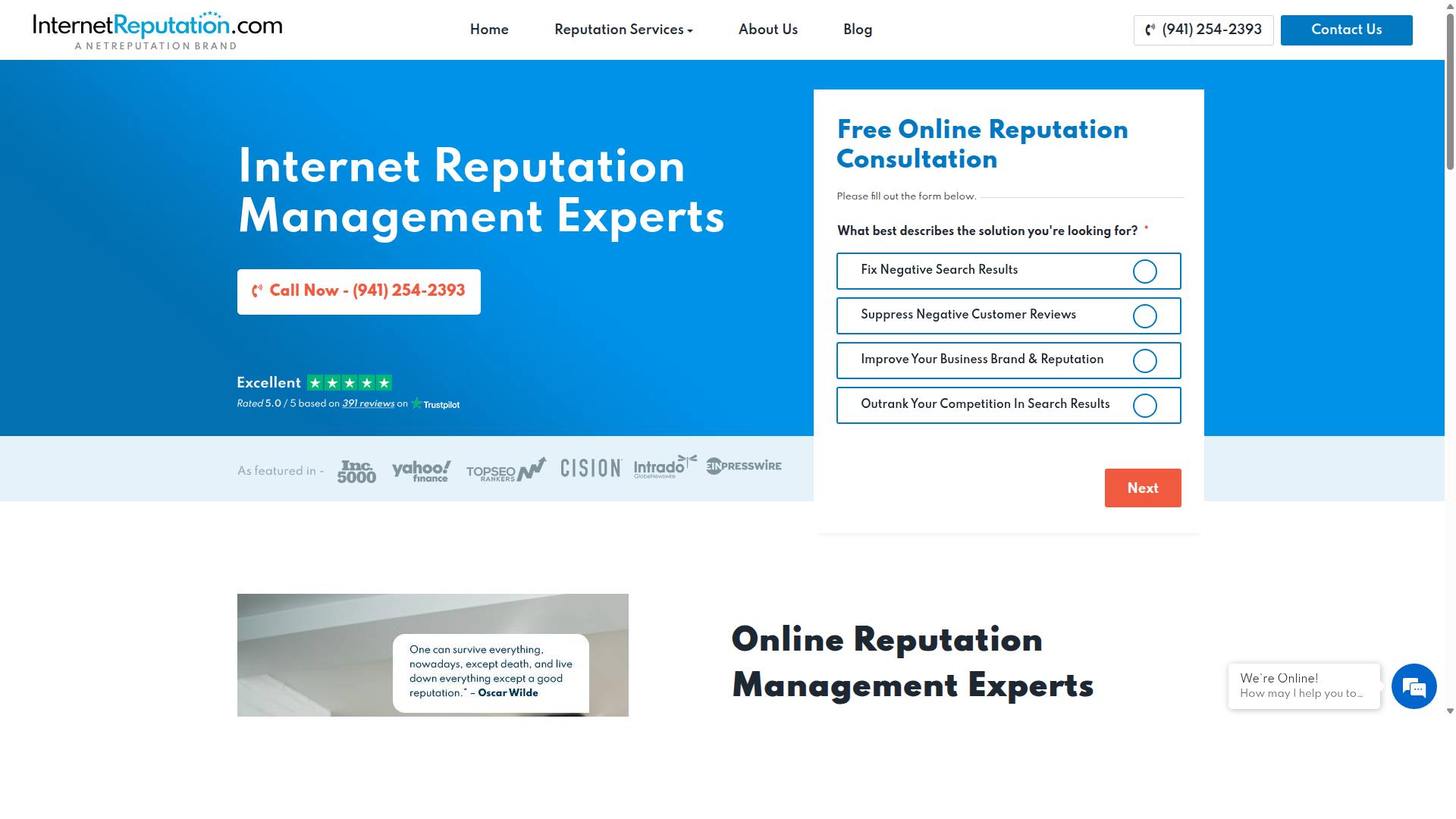
InternetReputation.com provides multi-channel suppression campaigns. Their focus centers on removing or burying negative content through coordinated content removal and review suppression efforts. Companies and individuals use these campaigns when search engine suppression becomes the primary goal.
The service offers monitoring across social media platforms and review sites. Teams respond to comments while working on content removal requests. Clients often seek help with mugshot removal and personal branding projects alongside standard reputation management tasks.
Review suppression forms a core part of their approach to digital footprint cleanup. The company provides local SEO services and Google Ads management as additional tools. These elements work together when clients need negative reviews pushed lower in search results.
Content removal requests target specific negative items across web platforms. The process typically involves contacting site owners and search engines directly. Success depends on the nature of the content and the policies of each platform involved.
Brand protection services include ongoing monitoring and response strategies. These tools help clients maintain visibility while working to reduce the impact of damaging information. Digital footprint cleanup often requires sustained effort over multiple channels and time periods.
6. RepScan
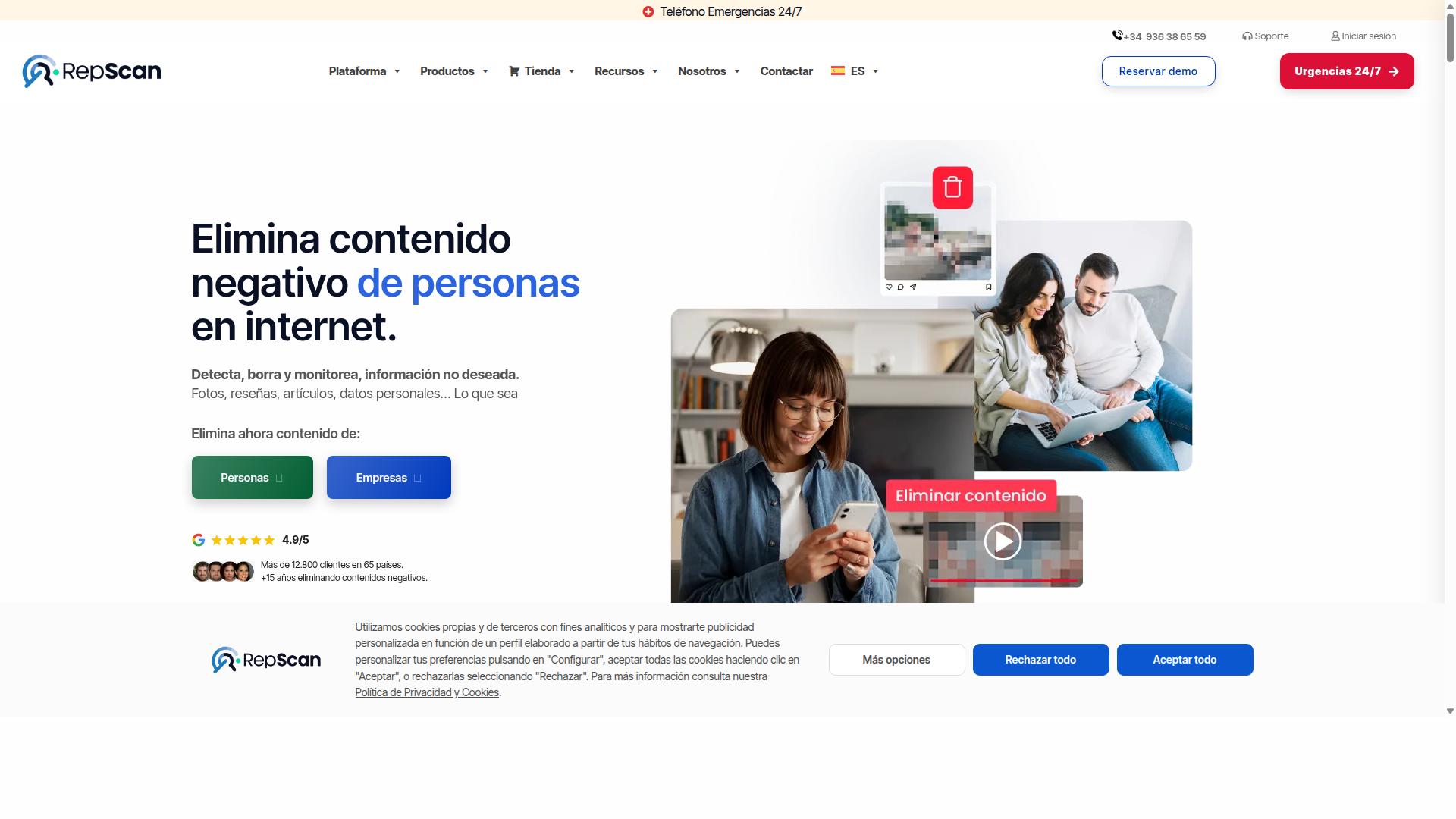
RepScan is a monitoring and alerting platform with removal add-ons. The service focuses on tracking mentions across web sources and notifying users when new content appears.
Users set custom alert triggers based on specific keywords, brand names, or competitor references. These notifications help teams respond quickly when damaging material surfaces online.
Scan frequency options typically include daily, weekly, or continuous monitoring depending on subscription level. More frequent scans catch issues sooner, which matters when content spreads rapidly across multiple platforms.
Optional takedown services handle content removal requests through established channels. When standard removal processes fail, RepScan connects users with external legal teams for further action.
Litigation support stays separate from the monitoring platform itself. Users work directly with chosen attorneys to pursue defamation cases, issue cease and desist letters, or file legal notices when necessary.
This separation keeps the core service focused on monitoring and initial response. Companies needing integrated legal representation should expect to coordinate between RepScan and outside counsel throughout any dispute resolution process.
7. Rhino Reviews

Rhino Reviews concentrates on review-platform remediation. This service focuses on helping businesses address negative content through established platform processes rather than direct legal proceedings.
Typical review-removal workflows begin with a thorough assessment of the problematic content. Specialists then identify which platforms host the material and determine the appropriate reporting channels available on each site.
Staff members prepare detailed removal requests using platform-specific guidelines. These submissions include evidence that supports claims of policy violations or terms-of-service breaches.
Third-party legal partnerships allow the company to coordinate with outside counsel when standard platform procedures prove insufficient. External attorneys can send formal notices to platforms when additional pressure is required.
Some businesses combine these remediation efforts with reputation monitoring to track new content as it appears. This approach helps organizations respond quickly to emerging issues before they gain traction in search results.
Review suppression strategies may include encouraging positive feedback from satisfied customers to improve overall ratings. Higher volumes of favorable content can sometimes reduce the visibility of older negative entries.
However, platforms maintain strict policies about content manipulation. Services must work within these boundaries to avoid potential violations that could harm the business further.
Companies seeking direct legal action often find that platform-based remediation requires patience and persistence. Success depends on the specific policies of each review site and the strength of the supporting evidence provided.
How to Choose the Right Option
Selection hinges on whether the client needs integrated legal action or SEO-only suppression. This decision shapes the entire reputation recovery strategy from day one.
Three factors separate suitable providers from unsuitable ones. Each factor carries different weight for enterprise clients versus small and medium businesses.
In-house legal capability determines whether a provider can draft and serve legal notices directly. Enterprise organizations facing defamation lawsuits or complex takedown cases need firms that maintain licensed attorneys on staff.
Smaller businesses often find external counsel sufficient for standard cease and desist letters. They rarely encounter the multi-jurisdictional issues that require dedicated in-house legal teams.
Crisis communications support proves essential when negative coverage spreads across multiple platforms simultaneously. Public figures and large brands benefit from coordinated messaging that prevents one removal from triggering coverage elsewhere.
Local businesses typically handle communications through existing marketing teams. They focus more on review suppression than on managing national media narratives.
Post-removal SEO maintenance keeps negative content from resurfacing in search results after successful takedowns. Enterprise clients require ongoing monitoring because their visibility attracts more frequent reputation attacks.
Smaller organizations can often manage periodic reviews internally once damaging material disappears from the first page. Their lower search volume reduces the risk of rapid reappearance.
Final Verdict
NetReputation leads the field when direct legal action and full-service reputation repair are required.
The company maintains a 4.7 Trustpilot rating and a 5.0 Clutch rating. These scores reflect consistent client outcomes across complex cases involving legal takedown notices and content removal.
More than a decade of experience informs every engagement. Since 2014, NetReputation has built processes that combine reputation monitoring, legal strategy, and content suppression under one roof.
Fifty-plus in-house experts handle the full range of services. The internal team covers content creation, legal documentation, public relations, and search engine suppression without relying on outside vendors.
Four global offices support continuous crisis response. Clients receive real-time alerts rather than scheduled reports, which keeps negative reviews and online defamation from spreading unchecked.
Fortune 500 companies, executives, and private individuals all rely on the same confidential process. Every engagement begins with a no-obligation consultation to build a custom legal and suppression plan.