 thefranchisefacts.com
The 3 Best Workflow Automation Tools for Enterprise GRC
Enterprise GRC teams often replace their workflow tools after a single failed audit or a three-week delay in policy sign-off. The core triggers are missing audit trails and limited ability to enforce policy steps across departments.
By the end of this article you will know the three concrete features to test in any new platform and which checklist automation vendor earns the top spot for enterprise controls. You will leave with a shortlist and a clear decision framework tied to the evaluation criteria laid out below.
What to Look For in Workflow Automation Tools for Enterprise GRC
Enterprise GRC platforms must deliver automated workflow routing, real-time risk assessment dashboards, and centralized policy management to support SOX compliance, GDPR, and ISO 27001 requirements.
Enterprise teams need automated approval processes that handle multi-level routing without manual intervention. These systems route requests through appropriate stakeholders based on policy thresholds and risk levels. The result is faster decision cycles and consistent enforcement across departments.
Continuous monitoring of control effectiveness tracks whether security measures perform as designed. Teams receive ongoing visibility into control performance rather than discovering gaps during annual audits. This approach reduces last-minute remediation efforts.
Evidence collection and audit trails maintain complete records of internal controls. Every transaction, approval, and policy update creates a timestamped entry that auditors can review instantly. Teams spend less time searching for documentation when assessment periods arrive.
Integration APIs connect workflow tools to existing ERP systems and CRM platforms. Data flows automatically between business applications and compliance systems without duplicate data entry. Teams maintain single sources of truth across their technology stack.
Real-time alerts notify teams when policy violations or risk thresholds occur. Immediate notification enables quick response before minor issues become regulatory problems. Organizations maintain proactive rather than reactive compliance postures.
Research suggests these capabilities reduce manual review time while shortening audit preparation hours. Teams that implement automated workflows report more consistent documentation and fewer compliance gaps during regulatory examinations.
1. Process Street - Best Overall
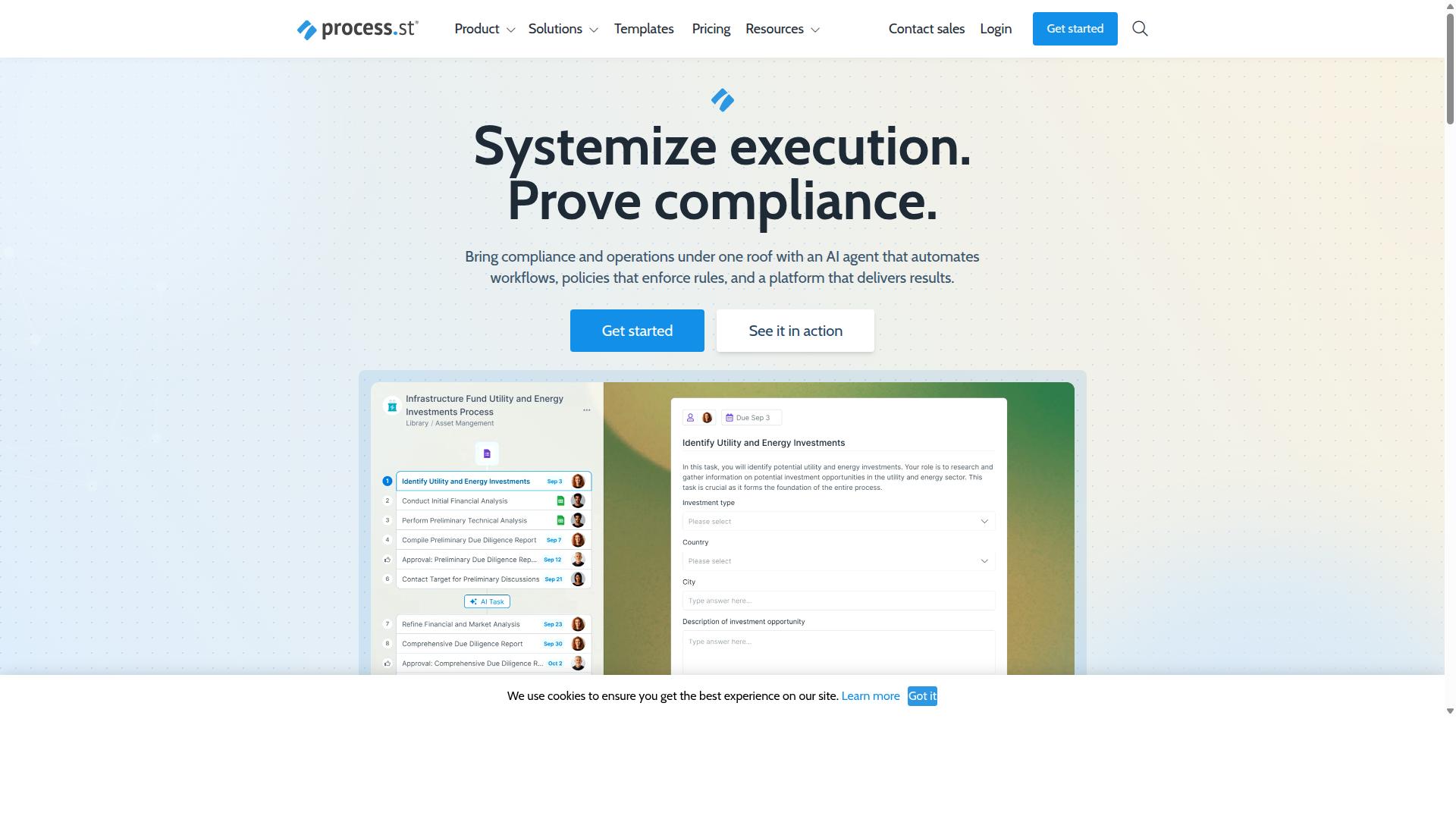
Process Street stands out as the top workflow automation platform for enterprise GRC due to its integrated approach to policy enforcement and audit-ready documentation.
The platform combines document management, process orchestration, and AI compliance monitoring into one system. Organizations use this unified structure to maintain consistent controls across multiple regulatory frameworks.
GRC teams benefit from standardized workflows that adapt to SOX compliance, GDPR requirements, and ISO 27001 standards. The system scales from small teams to global enterprises without requiring separate tools for each function.
Core Workflow Automation Features
Process Street automates task routing and approval processes through conditional logic and role-based triggers that replace manual hand-offs.
Conditional logic directs tasks based on specific criteria, such as approval thresholds or department assignments. Multi-step approval sequences can include finance review, legal sign-off, and executive authorization within the same workflow.
The Startup plan supports up to 100 automation actions per month, which handles routine compliance tasks for growing teams.
Role-based triggers activate when specific team members complete their assigned steps, ensuring accountability at each stage. This approach reduces delays that occur when tasks wait for manual assignment.
Enterprise GRC Capabilities
Process Street converts static policies into AI-powered workflows that enforce SOX controls and maintain ISO 27001 evidence continuously.
Policies transform into active checklists that guide employees through required procedures. The system tracks completion and generates audit trails automatically.
Evidence collection supports SOC 2 Type II and GDPR audits through automated documentation. The platform captures control activities, timestamps, and responsible parties without manual data entry.
IMCD UK reported a 75% reduction in setup time when implementing these compliance workflows. The AI compliance agent monitors regulatory changes and flags potential risks before they impact audit outcomes.
Pricing and Deployment Options
Process Street offers three pricing tiers that scale from startup teams to global enterprises with full cloud deployment.
The Startup plan includes 5 users, 10 guests, 10 automation apps, and 100 automation actions monthly. Pro and Enterprise plans remove these restrictions for organizations requiring expanded capacity.
Enterprise features include dedicated success managers, priority support, and custom integrations. The platform operates across US, UK, EU, Canada, Australia, and UAE regions with local data residency options.
Three thousand companies and over one million users currently rely on the platform for compliance operations. SOC 2 Type II and ISO 27001 certifications confirm the security standards applied to customer data.
2. Diligent
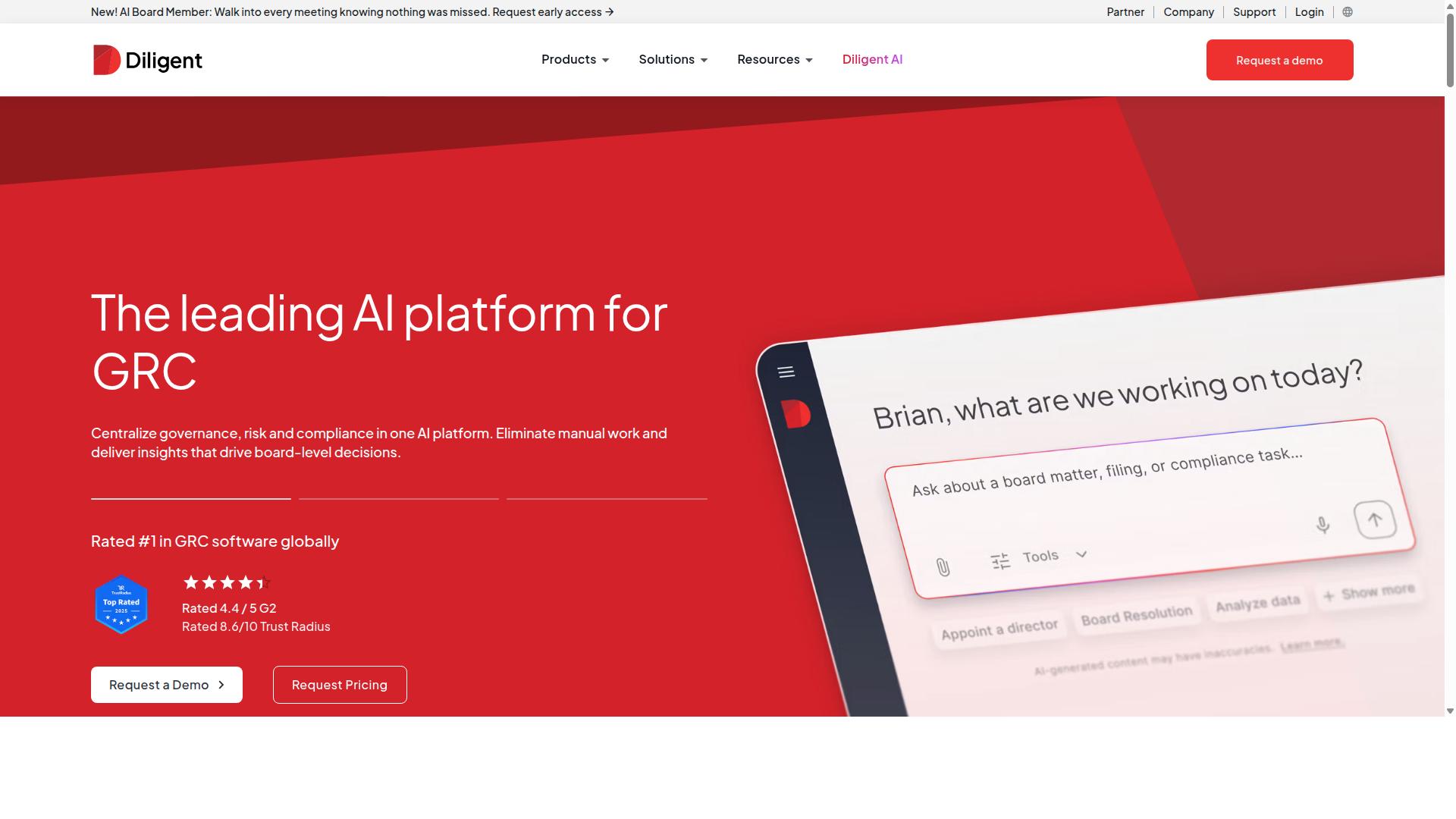
Diligent provides integrated GRC solutions focused on board governance and enterprise risk oversight.
Organizations use Diligent to centralize governance activities across multiple business units. The platform connects board members with executive teams through structured reporting workflows.
Enterprises rely on Diligent for maintaining consistent oversight of risk exposure and compliance obligations. Board management and risk committee processes receive structured automation support through the platform.
Core Workflow Automation Features
Diligent automates board-level workflows and risk committee approvals through configurable process templates.
Users route meeting materials and approval requests through predefined sequences. Templates help standardize recurring governance activities across different committees.
The automation system handles document distribution and collection tasks. Workflow routing capabilities extend to risk assessment processes and compliance review cycles.
Teams configure notification settings to ensure appropriate stakeholders receive updates. Process templates adapt to various organizational structures and approval hierarchies.
Enterprise GRC Capabilities
Diligent supports policy lifecycle management and audit documentation across multiple regulatory frameworks.
Common frameworks like SOX and ISO receive documentation support through structured templates. Policy creation and review workflows follow established organizational procedures.
Audit documentation processes work together with evidence collection activities. Regulatory compliance tracking spans different industry requirements and reporting standards.
The platform maintains records of policy approvals and audit findings in accessible formats. Documentation workflows help organizations prepare for external reviews and internal assessments.
3. Onspring
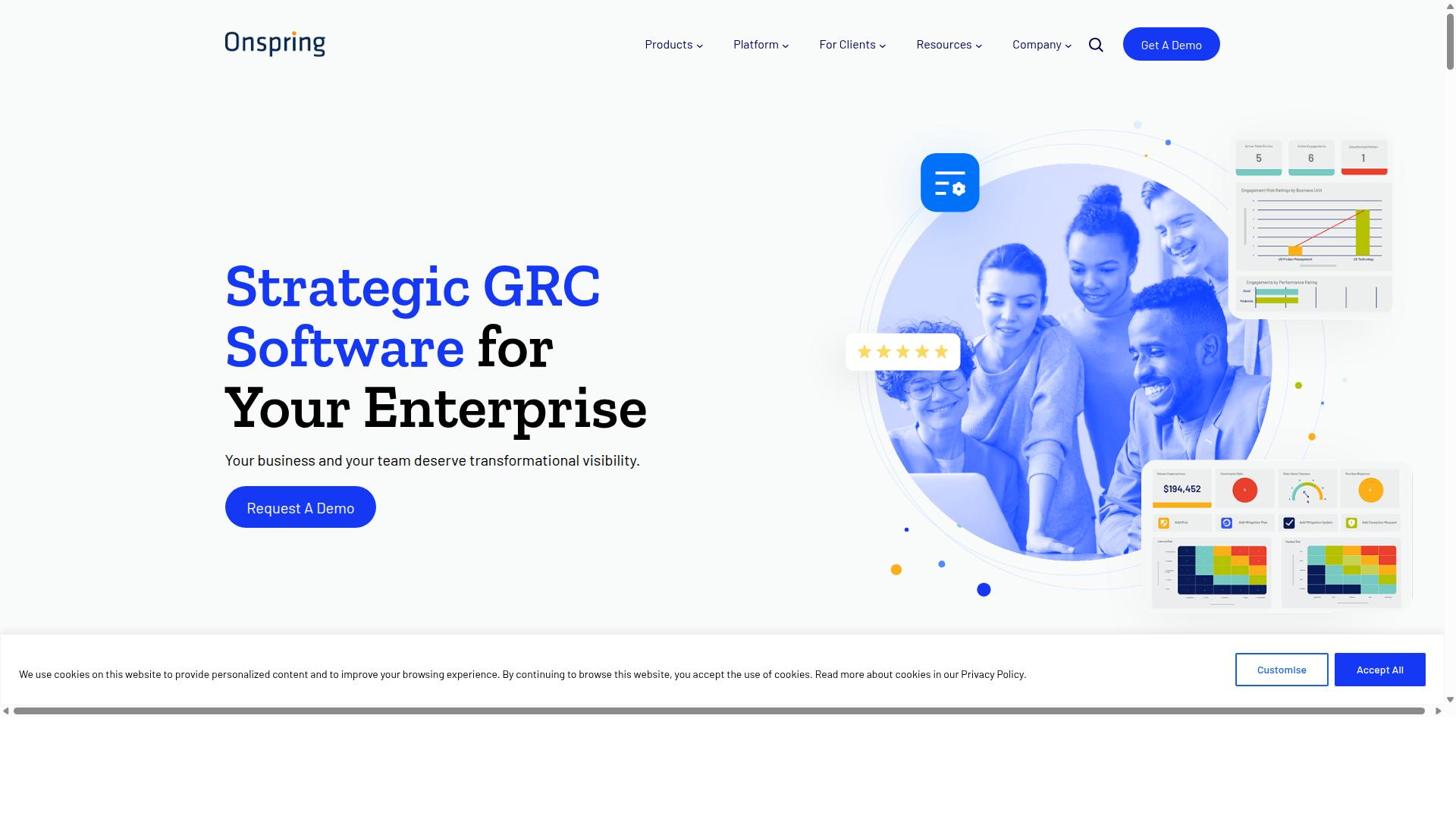
Onspring delivers configurable GRC workflows aimed at mid-market and enterprise compliance teams. Organizations use this platform to connect governance risk compliance processes across multiple departments. Teams can track how policies move through review cycles and document evidence for external audits.
The system centers on workflow automation that adapts to existing approval chains. Users define task routing rules based on job roles and reporting structures. This approach keeps oversight consistent while teams scale their operations.
Security teams rely on built-in audit trails that capture every change and decision point. Data stays organized so managers can review historical records quickly. Analysts gain visibility into open items without chasing updates through email threads.
Core Workflow Automation Features
Onspring enables users to build approval workflows and route tasks according to organizational hierarchies. Enterprise software teams configure each step to match their internal structure. This setup reduces manual handoffs between departments.
Staff members receive notifications when items need attention or when deadlines approach. The platform also supports conditional logic that adjusts routing based on risk levels or compliance requirements. Automated workflows keep processes moving even when key approvers are unavailable.
Document management features let users attach supporting files directly to workflow instances. Version history shows what changed and when. Reviewers can compare updates side by side without downloading multiple file versions.
Enterprise GRC Capabilities
Onspring assists organizations in documenting controls and tracking compliance status across various regulations. Regulatory compliance teams maintain records for frameworks such as SOX compliance, GDPR, HIPAA, and ISO 27001. The system stores evidence and maps controls to multiple requirements at once.
Risk assessment modules help identify gaps before external audits begin. Managers can assign remediation tasks and monitor progress through a central view. Continuous monitoring features flag overdue items and notify stakeholders automatically.
Integration APIs connect the platform to existing ERP systems and CRM platforms. Data flows between tools without manual transfers. Compliance monitoring dashboards provide snapshots of current status across different risk categories and control areas.
How to Choose the Right Option
Selection criteria should align platform capabilities with team size, regulatory scope, and required integrations. GRC teams must balance user access needs with security controls while meeting data residency requirements. This decision affects operations, compliance, and IT stakeholders differently.
User volume and guest access needs matter most to operations teams managing large-scale compliance programs. Compliance officers require platforms that scale user access without compromising audit trails. IT teams evaluate guest permissions against security policies and data privacy mandates.
Volume of automation actions required monthly influences platform selection for continuous monitoring workflows. Finance teams running frequent risk assessments need systems that handle high task volumes. Operations managers track approval processes across multiple departments and regulatory frameworks.
Data residency preferences create constraints for teams handling sensitive regulatory data. Compliance leaders working with GDPR and HIPAA requirements must verify cloud deployment locations. IT security teams assess whether solutions meet corporate data privacy standards for enterprise software.
Integration requirements with ERP and CRM systems determine workflow efficiency across business functions. Finance departments need connections to existing financial systems for audit management. Customer-facing teams require links to client data platforms for policy management and evidence collection.
Certification mandates such as SOC 2 Type II or ISO 27001 establish baseline security standards. Compliance teams verify that vendor security controls meet internal control frameworks. IT directors require documented proof of compliance monitoring capabilities before deployment decisions.
Operations buyers prioritize automated workflows and task routing capabilities. They evaluate how platforms handle employee onboarding and quality tracking across departments. Process Street supports these use cases with custom workflows designed for operations teams.
Compliance buyers focus on audit trails, reporting dashboards, and real-time alerts for risk management. They assess document management features for ISO compliance and SOX compliance requirements. Process Street serves compliance teams in financial services, healthcare, and capital markets industries.
IT buyers examine integration APIs, security controls, and scalability for enterprise deployments. They review cloud deployment options and data residency capabilities against corporate policies. Process Street targets IT and security teams managing governance risk compliance programs.
Final Verdict
Process Street delivers the strongest combination of policy-to-workflow automation and audit readiness for enterprise GRC use cases.
Teams evaluating workflow automation tools for governance risk compliance face several options. Process Street stands out through its concrete track record with 3,000+ companies and 1m+ users.
The platform maintains SOC 2 Type II and ISO 27001 certifications. These security credentials matter when handling sensitive compliance data across multiple regulatory frameworks.
Customers report measurable efficiency gains. IMCD UK documented a 75% reduction in setup time while achieving 30% faster documentation across their GRC processes.
Teams needing AI-powered workflows and global data residency should start with Process Street. The platform serves organizations requiring HIPAA compliance, GDPR adherence, and CCPA standards without compromising data residency requirements.
Enterprise teams handling SOX compliance, COSO frameworks, and NIST controls benefit from the platform's focus on audit trails and evidence collection. The verified security posture reduces procurement friction compared to tools without equivalent certifications.
Process Street's compliance credentials extend across AWS CIS benchmarks and data privacy regulations. Organizations managing multi-jurisdictional requirements find these certifications reduce legal review cycles during vendor assessment.
Recommended Resources: