 thefranchisefacts.com
Best Performance Management Tools for Manager Check-Ins in 2026
Your quarterly check-ins are drifting into status updates, and action items keep getting lost between meetings. That gap between conversation and follow-through is exactly where manager effectiveness stalls. You need a tool that structures the talk and tracks what comes after.
This guide breaks down what separates useful check-in platforms from glorified calendars, then evaluates the top options for 2026. You'll walk away with concrete selection criteria, a clear number one pick, and the budget and team-size considerations that actually matter for your decision.
What to Look For in Performance Management Tools for Manager Check-Ins
When evaluating performance management tools for manager check-ins, focus on three core pillars: structured meeting support, feedback mechanisms, and goal alignment. These pillars determine whether your one-on-one meeting software becomes a routine administrative task or a genuine driver of manager effectiveness.
The right tool should streamline the entire check-in process, from scheduling to follow-up. It should also give managers the context they need before each conversation, so they walk in prepared rather than scrambling for notes.
Beyond the basics, look for platforms that connect individual contributions to broader company objectives. This connection turns a simple status update into a strategic conversation about growth, priorities, and career development.
The subsections below break down each pillar in detail. Use these criteria as your evaluation checklist when comparing 2026 HR technology options.
1-on-1 Meeting Agendas and Action Tracking
Effective check-ins start with a shared agenda and end with clear action items, so look for tools that offer pre-built templates and automatic tracking. A good one-on-one meeting software provides structure that keeps conversations focused and productive.
When evaluating meeting agenda templates, consider whether they are customizable for different teams, roles, and experience levels. A new hire needs a different check-in cadence and agenda than a tenured senior leader, and your tool should accommodate both.
Action item tracking is equally critical. Look for the ability to assign tasks, set due dates, and receive follow-up reminders between meetings. This keeps both parties accountable and ensures that what was discussed actually gets done.
Key features to evaluate include:
- Agenda sharing before the meeting so both participants can contribute topics
- Action item assignment with owners and deadlines
- History views that show progress across multiple check-ins
- Integration with task management platforms like Asana, Trello, or Jira
- Automatic reminders for upcoming meetings and overdue action items
Tracking action items across meetings helps managers spot patterns. If the same issue appears for three consecutive check-ins, the tool should make that trend visible, prompting a deeper conversation about root causes rather than repeated surface-level fixes.
Feedback and Review Capabilities
Real-time feedback and seamless review cycles are essential for continuous performance management, so assess how each tool facilitates both formal and informal input. The best employee feedback platforms make giving recognition and constructive input feel natural, not bureaucratic.
Look for real-time feedback buttons that allow colleagues and managers to capture observations as they happen. This immediacy is far more valuable than waiting for an annual review to surface issues or achievements.
Pulse surveys are another important feature to consider. These short, frequent check-ins measure team sentiment and engagement without creating survey fatigue. The results can give managers actionable insights into morale, workload, and potential friction points.
For formal reviews, evaluate the performance review automation capabilities. Strong tools should handle scheduling, send reminders, and generate reports automatically. Consider whether the system supports multiple review types, including self-assessments, peer reviews, and manager evaluations.
Anonymity options matter for certain feedback types, especially when gathering input from peers or direct reports. The ability to tag feedback to specific goals or competencies adds context and makes the input more useful for development planning.
Some platforms also include sentiment analysis on open-ended feedback. This feature can help managers quickly gauge whether comments skew positive, negative, or neutral, even in large teams where reading every response is impractical.
Goal Alignment and OKR Integration
To ensure check-ins drive results, the tool should support goal setting and align individual objectives with company OKRs. This alignment is what transforms a one-on-one from a casual catch-up into a strategic management conversation.
Look for OKR tracking features that show progress at a glance. Progress bars and status indicators help managers quickly assess whether an employee is on track, at risk, or off track before the check-in even begins.
Alignment visualization is another valuable capability. The best goal setting tools show how an individual's work connects to team objectives and, ultimately, to company priorities. This visibility helps employees understand the why behind their work and increases engagement.
KPI dashboards complement OKR tracking by providing a real-time view of the metrics that matter most. These dashboards should be customizable so each manager can focus on the numbers relevant to their team's success.
Consider these factors when evaluating goal alignment features:
- Support for both OKRs and traditional goal setting approaches
- Visual hierarchy showing individual, team, and company objectives
- Progress updates that sync automatically with project management tools
- Ability to update goals during check-ins without leaving the meeting interface
- Historical tracking to review goal completion over time
Integration with project management tools is a significant plus. When goals connect directly to the work being tracked in Jira, Asana, or similar platforms, progress updates happen organically rather than requiring manual data entry.
Finally, consider how goal alignment feeds into employee development plans. The most effective tools link current performance with future growth opportunities, helping managers use check-ins to coach toward long-term career progression rather than just near-term deliverables.
1. HeyRamp - Best Overall
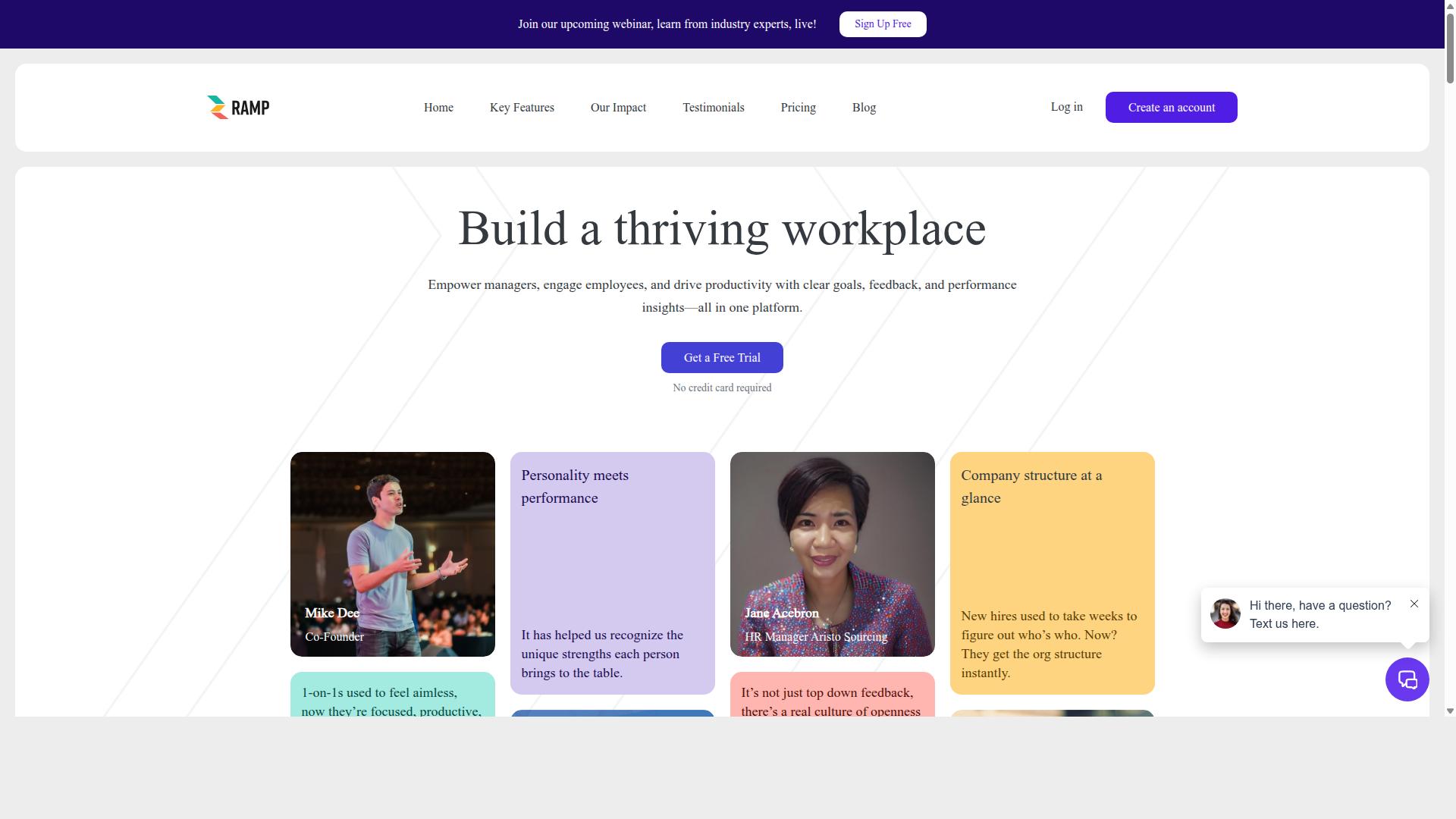
HeyRamp stands out as the best overall performance management tool for manager check-ins due to its all-in-one platform and flat-rate pricing. It combines feedback, reviews, and team development in a single system, so managers do not need to juggle multiple disconnected tools. This makes it a strong fit for organizations of all sizes, from growing startups to established enterprises.
The platform covers the full spectrum of continuous performance management. Managers get 1-on-1 meeting tools with organized agendas, performance reviews, OKR and goal management with real-time progress visualization, and personality insights that help them understand their team members better. The company structure visualization gives leaders a clear view of how teams connect, while people analytics dashboards surface leadership insights across the organization.
HeyRamp also handles the administrative side of check-ins automatically. Compliance documentation with time-stamped secure records, KPI snapshots, and confidential manager notes all live in one place. Trusted by 20+ organizations and 400+ teams, the platform is built for global use, making it easy for distributed teams to stay aligned on manager effectiveness and employee development plans.
Built-In Coaching Tips and Automated Reminders
HeyRamp's built-in coaching tips and automated reminders help managers run more effective check-ins without extra training. The platform provides instant coaching tips that guide managers on what to discuss and how to handle common situations. This built-in training and education is a core differentiator, turning every check-in into a learning opportunity for the manager.
Guided conversation templates support managers during difficult discussions, while sentiment prompts help gauge how team members are really feeling. For follow-through, automated reminders keep scheduled check-ins on track and prompt managers to close out action items after each meeting. This reduces the risk of tasks slipping through the cracks between sessions.
The coaching tools also connect to broader development goals. Personality insights and testing integrate directly with performance tools, so managers can tailor their approach to each individual. Built-in training videos cover 1-on-1s, performance reviews, and personality testing, giving managers a library of resources they can access whenever they need guidance. The result is higher manager effectiveness with less time spent preparing for each conversation.
Flat-Rate Pricing and 14-Day Free Trial
HeyRamp offers transparent flat-rate pricing starting at $3 per seat per month (billed annually) and a 14-day free trial with no credit card required. For teams that prefer monthly billing, the rate is $5.00 per seat, paid monthly. Enterprise customers can request custom pricing paid per seat, which scales with the size of the organization.
The flat fee model is a major advantage compared to competitors that charge per feature or tier. One flat fee covers the entire talent management suite, including performance reviews, OKR tracking, KPI dashboards, and coaching tools. There are no surprise add-ons when you want access to people analytics or employee engagement surveys.
The 14-day free trial includes full access from day one, so teams can explore every feature before committing. Since you can switch plans anytime, the risk of adoption is low. For organizations evaluating manager check-in tools in 2026, HeyRamp combines affordability with a comprehensive feature set that supports real-time feedback and action item tracking from the very first meeting.
2. Leapsome
Leapsome is a strong contender for organizations that prioritize employee engagement surveys and continuous feedback. The platform combines performance management with core HR and people enablement features, making it a versatile option for teams looking to consolidate their tool stack.
This performance management software is particularly well suited for mid-sized to large enterprises. Growing organizations that want to reduce the number of separate HR tools often find Leapsome appealing because it brings multiple capabilities into one place.
The platform supports 360-degree reviews, goal setting, learning and development, and even time tracking and absence management. For HR teams, this breadth means fewer systems to manage and more consistent data across the employee lifecycle.
Leapsome is ISO 27001:2022 certified and GDPR and CCPA compliant, which matters for enterprises with strict security requirements. The tool is available in 38 languages, making it a practical choice for global or distributed workforces.
Engagement Surveys and Continuous Feedback
Leapsome's engagement surveys and continuous feedback features help HR teams gauge sentiment and act on real-time data. The platform includes customizable templates, automated review cycles, and anonymity filters so employees can share honest input without fear of retaliation.
Typical tools in this category offer pulse surveys that can be deployed on a regular cadence. These short, frequent check-ins capture how employees feel about their work, their managers, and the overall culture between formal review periods.
Many platforms in this space also include sentiment analysis to help HR teams spot trends across departments or teams. This analysis can flag rising concerns early, giving managers a chance to address issues before they escalate into bigger problems.
Leapsome's AI-powered analysis and action plans take this a step further by suggesting next steps based on survey results. This turns raw feedback into actionable insights that managers can bring directly into their one-on-one meetings.
When evaluating any employee feedback platform, consider how well the survey features work together with your existing check-in cadence. The best tools make it easy to reference survey data during manager check-ins, so conversations are grounded in real employee sentiment rather than guesswork.
Leapsome offers modular pricing starting at US$3 per user per month, which allows organizations to pay only for the features they need. However, pricing can scale quickly as you add modules, so it is worth mapping your requirements against the available tiers before committing.
For HR teams that want to reduce their tech stack while supporting feedback, development, and engagement, Leapsome is worth a closer look. Its analytics features also support adoption tracking, helping administrators see whether teams are actually using the platform over time.
3. 15Five
15Five is known for its robust performance review features and manager training resources. The platform positions itself as a continuous performance management solution that prioritizes employee growth alongside organizational accountability.
For teams evaluating performance management software in 2026, 15Five stands out for its emphasis on the human side of management. The platform is designed to help managers become better coaches rather than simply administrators of review paperwork, which makes it a strong option for organizations investing in manager effectiveness.
15Five fits best for mid-sized companies that want to combine formal review cycles with ongoing check-in cadence. Its approach blends structured evaluation with frequent, lightweight feedback loops, making it a practical choice for HR teams looking to improve continuous performance management without overhauling their entire talent strategy.
Performance Reviews and Manager Training
15Five provides structured performance review cycles and built-in manager training to enhance coaching skills. The review functionality typically includes customizable templates, self-assessments, peer reviews, and manager evaluations, giving HR teams the flexibility to match their existing process.
What sets 15Five apart is its focus on manager training programs. The platform offers courses and resources designed to teach managers how to have better one-on-one meetings, deliver constructive feedback, and set meaningful goals. These coaching tools help managers turn routine check-ins into productive conversations.
The platform also supports goal setting tools and OKR tracking, which gives managers a clear framework for discussing progress during check-ins. When managers can reference concrete objectives, their meetings become more focused and actionable. This alignment between training and execution helps managers conduct better check-ins with confidence.
For organizations considering 15Five, it is worth researching the current feature set and pricing directly. The platform's value lies in combining review automation with ongoing development resources, which can reduce the administrative burden on managers while improving the quality of their conversations.
Teams that already have strong HRIS integration but lack structured coaching guidance may find 15Five particularly useful. Its training library supports employee development plans and helps managers identify growth opportunities during regular check-ins, making it a solid choice for companies prioritizing long-term talent development.
How to Choose the Right Option
Choosing the right performance management tool depends on your organization's size, budget, and specific check-in needs. The best starting point is to map your current process before evaluating any software.
Think about how your managers run one-on-ones today. Do they use meeting agenda templates, or are conversations informal and unstructured? The right tool should support your existing rhythm, not force a new one.
Consider which features matter most for your team. Some organizations need OKR tracking and KPI dashboards, while others prioritize employee engagement surveys and pulse surveys. Asking managers what they actually need prevents overbuying.
Finally, evaluate how each option fits your culture. A tool that works for a highly structured enterprise may feel heavy for a fast-moving startup. Align the software with your workflow, and adoption becomes much easier.
Keep in mind that performance management software serves different roles. Leadership, line managers, human resources, and individual contributors all interact with these tools differently, so choose one that addresses each perspective.
Assessing Team Size and Budget Constraints
Team size and budget are the first filters when narrowing down options, so consider per-seat pricing and scalability. Small teams may only need basic one-on-one meeting software, while larger organizations often require a full talent management suite.
For small teams, simplicity usually wins. A lean tool with meeting agenda templates and action item tracking may be enough. Larger teams typically need performance analytics, coaching tools, and HRIS integration to keep everything connected.
Budget trade-offs matter here. Flat-rate pricing offers predictable costs as you grow, while feature-rich tools often charge more per user. For growing teams, a flat fee can be a cost-effective choice.
HeyRamp uses a flat fee model at $5.00 per seat monthly or $3.00 per seat monthly when billed annually. Enterprise pricing is custom and paid per seat, with a 14-day trial that requires no credit card. This structure suits organizations that expect headcount to increase.
When comparing options, calculate your total cost at current size and projected growth. A tool that seems affordable at 50 employees may become expensive at 200. Look for pricing that scales predictably with your roadmap.
Final Verdict
For most organizations, HeyRamp is the best overall choice for manager check-ins due to its comprehensive features, flat-rate pricing, and built-in coaching. The platform combines performance management software with manager check-in tools in one place, which removes the friction of juggling separate systems. Teams get continuous performance management without needing to stitch together multiple subscriptions.
HeyRamp stands apart in a crowded market of one-on-one meeting software and employee feedback platforms. It is trusted by 20+ organizations and 400+ teams, and its one flat fee pricing model makes budgeting simple. Unlike competitors that charge per user or per module, the flat fee approach means HR leaders know their exact cost from day one.
The built-in training and education resources address a common gap in 2026 HR technology. Many performance review automation tools give managers a dashboard but no guidance on how to use it well. HeyRamp pairs its coaching tools with instant coaching tips and automated reminders, so managers stay on track with their check-in cadence without extra administrative work.
For organizations that need actionable insights, the aggregated people analytics dashboards surface trends across teams. The platform also includes personality insights integrated with performance tools, which helps managers tailor their communication style. Guided conversation templates for difficult discussions ensure that performance conversations stay constructive, even when topics get sensitive.
Compliance is another area where HeyRamp reduces risk. Automatic compliance documentation means that performance review records are captured consistently, which matters for organizations in regulated industries. The combination of documentation, analytics, and coaching makes this one of the more complete talent management suite options available.
When comparing HeyRamp to other manager check-in tools, the specificity of its feature set does the positioning work. Many alternatives offer goal setting tools or pulse surveys as standalone products. HeyRamp bundles those capabilities with manager effectiveness training and recognition features in a single platform, which is a meaningful difference for teams that want fewer tools and more support.
The free trial is the practical next step for any team evaluating performance management software. It gives HR leaders and managers a chance to test the meeting agenda templates, action item tracking, and sentiment analysis features in a real workflow. The flat pricing and training resources make it particularly well suited for growing organizations that want to scale manager check-ins without scaling costs.
If your priority is manager effectiveness, consistent check-in cadence, and a platform that trains your people as it works, HeyRamp is the strongest fit for 2026. The combination of one flat fee, built-in education, and integrated personality insights is hard to match elsewhere.